
A Quick Overview
- "Vegan leather" is a marketing term, not a single material. In many cases, it means PU or PVC - plastics.
- Plastic "leathers" can be hard to recycle, may crack or peel, and can shed microplastics as they age and wear out.
- Real leather has significant environmental costs too (livestock emissions, land use, tanning chemistry), but it can be a better choice when it lasts a long time, can be repaired, and is genuinely worn for years.
- The "by-product" argument is only partly true - many hides come from meat and dairy supply chains, but leather adds value and the economics are complicated.
- Tanning matters: look for better chemical management and transparency. In the EU and UK, chromium(VI) in leather that touches skin is restricted.
- "Plant-based leather" doesn't mean plastic-free; many alternatives still use PU coatings for durability.
- The most sustainable choice is usually the one you'll use the longest. Buy less, choose better, take care of it, and repair when you can.
- When choosing shoes for British weather, focus on construction, soles, stitching, and aftercare - not hangtag buzzwords.
Why This Topic Is So Confusing in the UK Right Now
You can find "vegan leather" everywhere on the high street: boots, trainers, handbags, and belts. The label says "no animal hide," which sounds simple. A lot of people also assume it means "better for the planet."
But that's not always how sustainability works. Materials have environmental impacts before they are used (how they are made), while they are being used (how long they last), and after they are thrown away (what happens at end of life). A product that doesn't use animals can still be heavy on fossil fuels, last a short time, and be hard to recycle. This is a problem if you want to cut down on waste and overconsumption.
So let's break it down: what is "vegan leather" really made of, what are the real pros and cons, and when is real leather the better environmental choice?
What Does "Vegan Leather" Really Mean?
There are no strict rules about what "vegan leather" means, unlike terms like wool or cotton. It is a general term for materials designed to look and feel like leather but without animal hide.
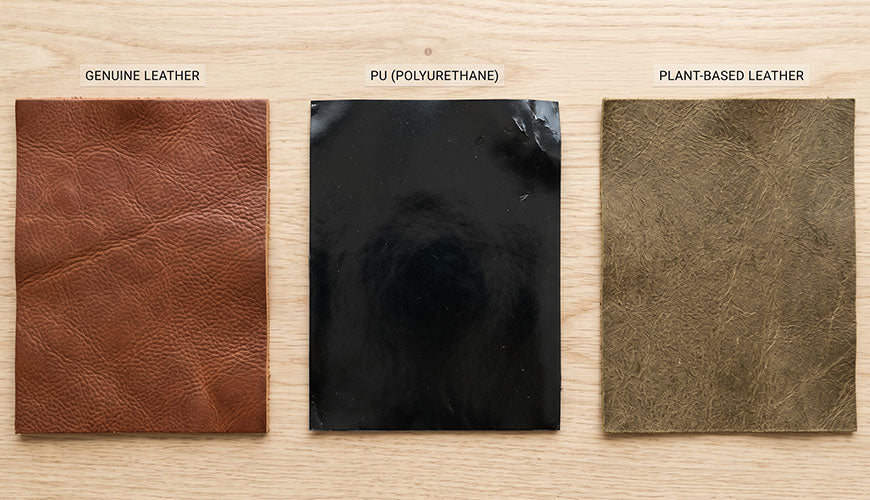
Most of the time, "vegan leather" products are made from synthetic polymers - typically polyurethane (PU) and sometimes polyvinyl chloride (PVC).
PU vs PVC in Simple Terms
- PU (polyurethane): Usually softer and more flexible than PVC; widely used in "leather-look" fashion items.
- PVC (polyvinyl chloride): An older, harder type of plastic still used in some faux leather products.
They're both plastic. That single fact changes the sustainability conversation because plastics and animal hides have very different life cycles.
What About "Plant-Based Vegan Leather"?
Cactus leather, pineapple leather, apple leather, grape leather, mushroom/mycelium leather - these are becoming more popular. The important thing to know is that many of these are composites: a mix of bio-based materials and synthetic binders or coatings added for strength, wear resistance, and water resistance.
That doesn't make them pointless. But you need to read past the headline and ask: "How much of this is really plant-based, and how is it finished?"
What Is "Real Leather," and Why Does Quality Vary So Much?
Real leather is animal hide that has been tanned - a chemical process that turns raw hide into a stable, usable material. But "real leather" is not one thing. It can be thin, corrected-grain leather with thick surface coatings, or thick full-grain leather that lasts decades.
Why Leather Lasts (and Why That Matters)
Longevity is an environmental superpower. A well-made leather boot that you wear for years and occasionally repair can have a lower total impact than a cheaper alternative that cracks, peels, and needs replacing after one or two seasons.
This isn't a free pass - it's simply acknowledging that durability can lower the "per-wear" impact of a product, especially in high-use categories like winter shoes. If you've ever wondered whether investing more upfront is worth it, our article on cost vs long-term comfort explores that question.
The Uncomfortable Truth: A Lot of "Vegan Leather" Is Plastic
Many brands don't talk about this part. Faux or vegan leather is often marketed with eco-friendly language, but the material is made from petrochemicals, doesn't biodegrade, and is hard to recycle.
That matters in three ways:
- Fossil fuel dependence (for feedstocks and manufacturing)
- End of life (few ways to recycle mixed-material composites)
- Wear and tear (surface coatings can degrade over time)
Microplastics: The Wear and Tear Nobody Talks About
When textiles with plastic coatings age - from heat, sunlight, friction, or water - they can break apart. Researchers have investigated how weathering can cause microplastic fibres to form. You don't need to panic about your shoes, but it's fair to include plastic-heavy "leather-look" items in the larger microplastics conversation, especially when they are designed for short lifespans.
The "Crack, Peel, Bin" Cycle
If you've ever had a cheap faux leather bag that started to peel like a sunburn, you've found the Achilles heel of many plastic "leathers": the top layer fails. Once that happens, it's hard to repair, and the item usually ends up in landfill or incineration.
That's why the environmental question is not just "Is it vegan?" but also: will it last? Can it be fixed? What happens when it wears out? For a closer look at how to spot the difference between genuine and synthetic, our guide on real vs faux sheepskin walks through the key checks.
Is Real Leather Always Better, Then? No - But It Can Be
Real leather has two main environmental problems:
- Livestock impacts: emissions, land use, feed, and in some regions, deforestation risk.
- Tanning and finishing chemistry: chemical management, wastewater, and solid waste.
The honest answer is that leather can be the better environmental choice in certain situations - mostly when it is made with better controls and used for a long time.
The "By-Product" Argument: Useful, but Not the Whole Truth
People often say "leather is a by-product of the meat industry." Industry sources stress that most hides come from livestock supply chains. Critics point out that leather is not just waste disposal - it is a valuable co-product that generates revenue and influences the economics of the system.
Both perspectives make an important point: leather's sustainability depends on how it is made and where it comes from, not a slogan.
What "Better Leather" Looks Like: Tanning and Chemicals
Tanning is where a lot of leather's environmental impact happens. If not properly managed, traditional chrome tanning can lead to problems with waste and wastewater.
A practical UK/EU reality check: in the EU (relevant for many products sold in the UK), leather goods that touch skin must not contain chromium(VI) at or above certain levels. The key point for shoppers is not to memorise numbers - it's to understand that chemical management is a real, regulated issue, and responsible production and testing matter.
For a fascinating look at an alternative approach, our article on how leather is tanned with vegetables explains one of the older, plant-based tanning methods.
How to Choose Leather with a Lower Impact
You don't have to be an expert. Just use a better checklist.
Transparency Signals
- The brand can tell you where the leather comes from and how it is tanned (at least the country or region).
- They talk about the tanning method (vegetable tanned, chrome tanned, chrome-free, etc.) without vague buzzwords.
- They can tell you about aftercare and repair options, even if it's a local cobbler.
Material Signals
- Full-grain or top-grain leather (lasts longer than heavily corrected splits).
- The surface doesn't feel heavily "painted" (thick coatings can feel more like synthetics and wear differently).
Construction Signals - Especially for Boots
- Strong stitching and a clean finish
- Removable, replaceable insoles
- Soles that look like they can be repaired or replaced
If you're choosing boots for the UK, construction quality is where durability really lives.
When "Vegan Leather" Is a Reasonable Choice
This is not a case for everyone to buy leather. You can still shop without animal products, but you have to be more critical than the marketing suggests.
When Vegan Leather Is More Practical
- Items that don't get heavy use (occasional accessories)
- Products where the brand is transparent about materials and expected lifespan
- Options that genuinely reduce fossil fuel use (not just a plant label on a PU-heavy composite)
Signs of "Greenwashed" Vegan Leather
- No information beyond "vegan leather" on the material
- No care instructions (this often signals the product is designed to be disposable)
- Very low prices in categories that normally require strong materials (boots, daily bags)
The "Plant-Based" Fine Print
Many emerging plant-based options are promising, but durability and coatings remain a challenge. When choosing a plant-based "leather," look for a breakdown of bio-based vs synthetic content, clear statements about plastic-free construction (if that matters to you), and evidence of abrasion resistance (especially for shoes).
The Decision-Making Framework That Actually Reduces Impact
Without getting lost in ideology, here is the simplest way to make a choice.
Step 1: Know Your Non-Negotiables
- Avoid animal products?
- Avoid plastics?
- Avoid certain chemicals?
You can't optimise everything at once, but you can be honest about what matters most.
Step 2: Buy for Longevity, Not Novelty
Pick the material and build quality that fits the job. In the UK, wet pavements, grit, and temperature changes are hard on weak materials.
Step 3: Plan for Care and Repair from the Start
A product you maintain is a product you keep.
Care Tips That Make Both Leather and Vegan Options Last Longer
Leather: The "Do This and It Lasts" Basics
Keep it clean:
- After wet walks, brush off dried mud and grit (grit acts like sandpaper at flex points).
- Wipe with a damp cloth and let it dry naturally.
Dry it properly:
- Never dry on a radiator - it can stiffen materials and damage finishes.
- Stuff with paper to keep the shape and absorb moisture.
Condition and protect:
- Use a good conditioner to prevent drying and cracking.
- Apply a protector suited to the leather type (smooth or suede).
Repair early:
- Replace heel taps, refresh soles, and fix stitching before a small problem becomes a bin-and-replace issue.
For a full care walkthrough, our guide on keeping loafer shoes looking new applies to most smooth leather footwear.
Vegan Leather: Avoiding the Traps That Cause Fast Breakdown
- Don't leave items in prolonged high heat (car dashboards, radiators).
- Don't over-flex or scrub the surface coating aggressively.
- Clean gently - don't use strong solvents that could damage PU layers.
- Store properly to avoid crushing (folds can turn into cracks).
What This Means for Boots and Slippers Specifically
Footwear endures a lot of friction and flexing, which makes it the ultimate test for the "eco on paper vs eco in real life" debate.
If you want to reduce your impact, focus on:
- A material that won't crack at the toe bend
- A sole that can handle wet pavement and repeated wear
- A lining that stays comfortable over time - so you keep reaching for the same pair
For winter comfort, well-made sheepskin slippers or sheepskin boots are a good example of this in practice: natural materials, warm linings, and construction designed to be cared for rather than replaced. If you already own a pair, our expert care guide will help you keep them going for years.
Frequently Asked Questions (FAQ)
Is vegan leather always made from plastic?
Most of the time, yes. The majority of products labelled "vegan leather" are made from PU or PVC. Plant-based composites exist but often still include synthetic binders or coatings.
Is PU better than PVC?
PU is generally softer and more flexible, which is why it's more common in consumer goods. But from an environmental standpoint, both are plastics and both are difficult to recycle when mixed with fabrics and adhesives.
Does vegan leather shed microplastics?
When plastic-coated fabrics age and break down, they can contribute to microplastic pollution. Research has specifically investigated the potential for microplastic fibre generation from PU synthetic leather under environmental stress.
Can real leather biodegrade?
Tanned leather is treated specifically to resist breakdown, so it doesn't behave like raw hide. End-of-life outcomes depend on the tanning, finishes, and waste systems. Longevity - keeping it in use - is often the most practical way to reduce impact.
Is leather just a by-product of the meat industry?
Many hides do come from meat and dairy supply chains. But leather has economic value of its own, which means it's more accurate to call it a co-product. The sustainability picture depends on sourcing and processing, not a simple label.
What is chromium(VI) in leather, and should I worry?
Chromium(VI) is a regulated substance in the EU for leather items that touch skin. Limits exist to reduce the risk of sensitisation and allergies. The best thing shoppers can do is buy from brands that test and manage chemicals responsibly.
Is vegetable-tanned leather always sustainable?
Not automatically. It can address some chrome-related concerns, but it still has impacts on water, energy, dyes, and transport. Look for durable design and transparent supply chains.
Are plant-based leathers (cactus, pineapple, mushroom) plastic-free?
Sometimes, but many still use PU coatings or binders for durability. Always check the material breakdown rather than relying on the headline.
If I don't buy leather, what's the best environmental option?
Choose the option you will keep and use for years. Prioritise durability, repairability, and honest material composition (including linings and coatings). Avoid "disposable fashion" faux leather.
How can I make any shoe purchase more sustainable?
Buy fewer pairs, wear them often, care for them properly, repair quickly, and store well. Sustainability is not only about materials - it's about behaviour and product lifespan.
Should I stop buying "vegan leather" entirely?
Not necessarily. But be sceptical of the label, read the material details, and prioritise longevity over trend-driven turnover - especially for boots and everyday items.
So what should I choose?
A simple rule: choose the material and construction that will last the longest and need the fewest replacements. For many people in the UK, that is where well-made leather can be the better environmental choice - not because it's perfect, but because it's built to last.