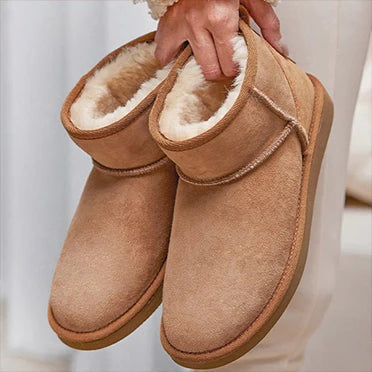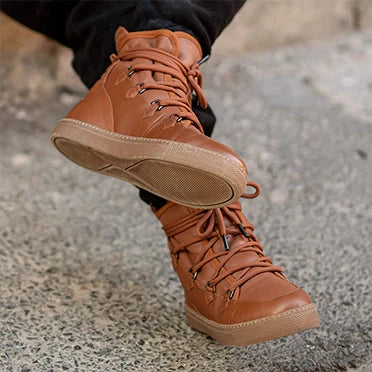

This guide covers five quick ways to spot real sheepskin, what to look for on labels, common mistakes, and what matters most for everyday wear in the UK.
Quick Summary: Real vs Fake Sheepskin at a Glance
- Real sheepskin is a natural hide with wool still on it, whereas faux sheepskin is usually made of synthetic fibres on a fabric backing.
- First, look at the back: real sheepskin has a suede-like hide on the bottom, while fake sheepskin has a woven or knitted fabric.
- Touch the fibres: real wool has a spring and variation, while fake wool often feels smooth or plastic.
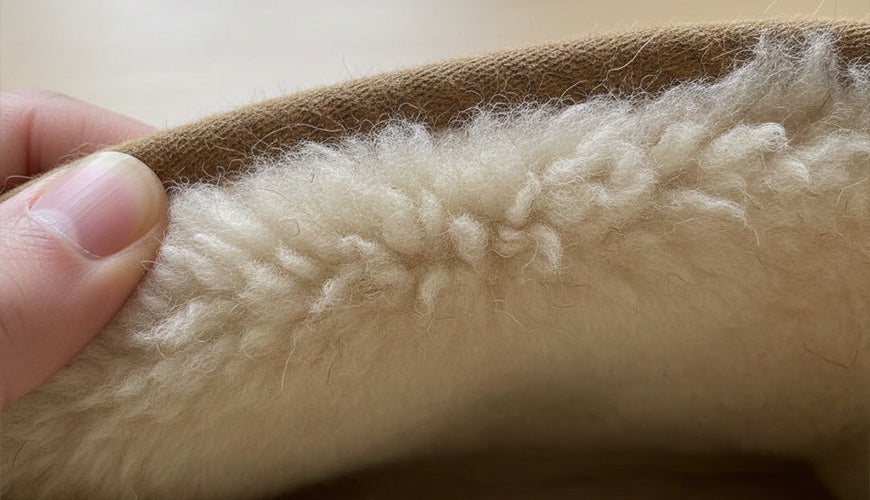
- Look at the "roots": real wool grows out of skin, while fake fibres are sewn or glued into fabric.
- The warmth test: real sheepskin usually warms up with body heat and stays comfortable. Faux sheepskin, on the other hand, can feel clammy or too warm in some places.
- Look at the language on the label. "genuine sheepskin", "real sheepskin", "shearling", and "lambskin with wool" are all better than "sheepskin-style".
- Only perform a careful burn test on a small piece of loose fibre (not the product). Wool smells like burnt hair, and synthetics melt and smell like chemicals.
- Real sheepskin is more expensive, has a longer lifespan, and responds better to proper care.
- Use the right material for the job: real sheepskin is ideal for cold, wet, stop-start days (think chilly walks, warm trains, and sudden drizzle), while faux sheepskin can be a good option for occasional wear or tighter budgets.
What Is Sheepskin, Exactly?
It's not just "fleece on the inside". It is a natural hide, or skin, from a sheep, with the wool still on it. In shoes, full sheepskin can appear in a few different ways:
Full Sheepskin and Shearling Explained
Full sheepskin: the wool stays on the hide, and you can often see a suede-like underside somewhere in the construction.
Shearling: sheepskin that has been cut to a uniform height of wool (common in boots, slippers, and insoles).
Leather Uppers with Wool or Sheepskin Linings
Leather or suede with wool lining: The upper part is sometimes leather or suede, and the lining is real wool or sheepskin, depending on how it is made.
Sheepskin is both a hide and a fibre, so it behaves differently than a fabric lining. It is usually tough, shapes to the foot over time, and (with care) wears in instead of just wearing out.
What Is Faux (Fake) Sheepskin?
Faux sheepskin is usually made of synthetic fibres, like polyester or acrylic, that are sewn onto fabric backings. It looks like wool, and in pictures it can be surprisingly convincing. In person, it usually has:
- A fabric base (either woven or knitted) instead of a hide.
- Fibres that are all the same (usually very close in thickness and sheen).
- A tendency to mat down faster when rubbed and wet.
- Some faux linings tolerate gentle machine washing better than real sheepskin, but they’re usually less tolerant of heat.
Faux isn't always "bad". It can be good for occasional use, fashion-forward items, or if you want a non-animal alternative. The problem is when it is sold in a way that makes you think you are getting one thing but are actually getting another.
Why the Difference Matters for Everyday Wear in the UK
In the UK, shoes have to deal with many different things, like wet pavements, stop-and-go traffic, cold mornings that turn into warm trains, and light rain that never looks bad but somehow gets everywhere.
Differences in materials can affect:
- Comfort over time (especially in slippers and boots that are worn for a long time)
- What happens to the lining when it gets wet, like when your feet sweat or get warm
- Odour build-up (natural fibres and synthetic fibres don't always react the same way)
- Longevity (wear and tear on the seams, matting, and flattening)
- Care (how to clean, brush, protect, and dry things safely)
If you're looking for sheepskin boots or slippers to wear often, it's a good idea to be specific. If you're buying a gift, being able to check the material ahead of time will keep you from getting any awkward surprises.
If you want to start your search in a safe place, look for product pages that clearly list the materials used for the upper, lining, and insole.
You can browse clearly labelled options across both women’s and men’s styles in Pegia’s sheepskin footwear collection.
Five Easy Ways to Tell Real Sheepskin from Fake
You can use these checks in the store, when you get home, or even when you're looking at product photos and descriptions.
1. Check the Backing Material
The back of real sheepskin is made of hide. Faux has a backing made of fabric.
- Real: The bottom looks and feels like suede, which is a natural surface that isn't perfectly smooth. It might have tiny pores, a subtle grain, and differences that happen naturally.
- Faux: The bottom looks like fabric. You could see a woven pattern, a knit structure, or a smooth mesh. It can feel flat and like cloth.
How to do it: Check for any exposed underside, like inside the boot opening, under an insole or along an edge seam. You can sometimes see under a removable insole in slippers.
A common mistake is: Thinking that "soft underneath" means real. Many fake backings are brushed to feel soft, but the structure is what gives them away: cloth vs. hide.
2. Look at the Fibre Roots
This is the best way to check "hands-on".
- Real: The wool appears to be growing out of skin when you pull it apart. The base is not a grid; it is a single piece of hide.
- Faux: the fibres are sewn into the fabric. You might see stitching, a mesh, or a smooth base that looks like it was made by hand when the two pieces are separated.
How to do it: Use your fingers to pull the fibres apart all the way to the base. Do this in two or three locations, as the thickness of faux fur can be sufficient to conceal the backing in a single spot.
Another tip: The length and density of real wool can change a little bit across the surface. Faux is usually very even.
3. Try the Texture and “Spring” Test
Run your hand over the surface and then lightly scrunch it up and let it go.
- Real: usually has a soft spring back. It feels "alive" and a little off. It doesn't usually feel slick, even when it's very soft.
- Faux: feels smooth most of the time but sometimes has a plasticky glide. When you scrunch it, it can stick together in a more even way.
What to look for:
- Does it bounce back after you push it?
- Does it come apart into fibres, or does it stay in a "sheet"?
- Does it feel smooth and cool like synthetic fleece?
On its own, this method isn't foolproof (some high-quality faux materials are excellent), but adding the backing check makes the distinction much clearer.
4. Warmth and Breathability Test
You don't need to have a lab test; just pay attention to how it reacts to body heat. The way real sheepskin naturally regulates warmth and moisture is explained in more detail in this guide on sheepskin temperature regulation and comfort.
- Real sheepskin usually warms up slowly and stays comfortable at a range of temperatures. Depending on the socks and activity, many people say it feels less "sweaty" when they wear it for short periods of time.
- Faux can get warm quickly, but it can also feel clammy if moisture builds up, especially if the fibres are thick and the base fabric doesn't breathe well.
How to do it: Put your hand inside the lining for 30 to 60 seconds, and then take it out. If it gets noticeably wet or sticky quickly, that could mean it has a synthetic lining (not always, but often). You can also do a short indoor wear test on clean floors with shoes.
Be realistic about what you expect: No lining is magic. The fit of your socks and how much you walk are both important. This test should be a supporting clue, not the only one that matters.
5. Smell Test and Optional Burn Test
Both wool from animals and synthetic fibres act in different ways. Safe and easy smell test:
- Real: may have a faint natural scent, sometimes slightly lanolin-like (especially when new).
- Faux: It can smell like chemicals, especially when you first open the plastic packaging, but this smell can go away.
Micro burn test (optional, only if you can do it safely): Only do this with one loose fibre that has already come off (don't cut the product). Do it over a sink with tweezers and keep it small.
- Real wool: tends to curl, singe, and smell like burnt hair; it can leave a crushable ash.
- Synthetic (fake): tends to melt, bead, and smell like chemicals; it might leave behind a hard plastic-like residue. If you don't feel comfortable doing this, don't do it. Most of the time, the backing and root checks will tell you what you need to know.
How to Read Labels and Product Descriptions Correctly
Most of the time, confusion happens with online listings. This is how to read the language.
Clear Phrases That Usually Mean Real Sheepskin
- "Genuine sheepskin"
- "Shearling"
- "Lambskin with wool" (the wording changes, but it means hide + wool)
Warning Signs in Online Listings
- "Sheepskin-style"
- "Sheepskin effect"
- "Fake shearling"
- "Teddy lining"
- "Borg lining", which is often used for fake fleece
None of these are wrong in and of themselves, but they are not real sheepskin. If the listing isn't clear, look for a list of the materials used for the upper, lining, and insole. If it only says "sheepskin" once and doesn't say where, don't believe it.
A Quick Checklist Before You Buy Online
- Does "sheepskin" refer to the whole item or just the lining?
- Are the materials listed separately, like the upper, lining, footbed, and outsole?
- Are there close-up pictures of the lining and any edges that are showing?
- Does the brand explain how to care for and clean it in a way that is similar to real sheepskin? For example, does it say to clean it gently and let it air dry instead of washing it in hot water?
- Is there a pattern in the title, bullets, and specification section?
If you want to buy something that will last, it's a good idea to shop at stores that are specific. If you're trying to decide between options, browsing clear-category pages can help you keep things the same. While you make your list, it makes sense to click on Pegia.com > Sheepskin Footwear and Pegia.com > Care & Cleaning Guides (if they are available).
Common Mistakes People Make When Identifying Sheepskin
Mistaking “Fluffy” for Real Sheepskin
Thinking that "fluffy" is the same as real Faux can be very fluffy, especially when it's new. Real sheepskin can be thick and short (shearling), which can make it look less dramatic.
Relying on Only One Test
One clue can lead you the wrong way. At least two should be combined: backing and root check is usually enough.
Mixing Up Suede and Sheepskin
Sheepskin is wool-covered hide, while suede is leather. Suede uppers are common on real sheepskin boots, but suede alone doesn't mean that the lining is real sheepskin.
Expecting Real Sheepskin to Look Perfectly Uniform
There is variation in natural materials. That is part of the point. If something is too perfectly symmetrical, it could be a fake.
If You’re Buying Sheepskin as a Gift
Shopping for gifts is stressful because you might not want to ask the person directly what they want, and they might care about comfort, warmth, or the type of material.
A simple way to do it:
- If the gift is for everyday winter wear, make sure the material is clear and the construction is strong.
- If you want to use it inside, make sure the lining is real and comfortable to walk on.
- If the person you're giving it to doesn't want any animals in it, be sure to choose faux and look for honest labelling.
If you're buying from Pegia, you can make things easier by looking through categories that clearly separate materials and then reading the product page's specification panel.
Caring for Real vs Faux Sheepskin
Carelessness is when people unintentionally make a product last less long. Even if two linings look the same, they usually like to do things in different ways. Because natural and synthetic materials react differently to moisture and heat, following the correct routine matters. This sheepskin care guide explains safe cleaning, drying, and long-term maintenance.
How to Care for Real Sheepskin
- Brush the wool regularly. A soft brush helps lift the wool and stops it from matting.
- Spot clean: Use a damp cloth and a mild cleaner that is safe for suede and sheepskin. Don't soak.
- Only air dry; stay away from radiators, hot air vents, and direct high heat.
- Use protection wisely: a protector made for suede/sheepskin can help with light rain and marks on the outside.
After a day of rain:
Put things with paper in them to keep their shape and soak up moisture, then let them dry naturally at room temperature. Being patient is more important than being quick.
How to Care for Faux Sheepskin
- First, look at the label: 'faux' is different. Some things can handle being washed gently in a machine, while others can't.
- Don't use high heat; it can flatten the fibres and hurt the adhesives on the back.
- Brush when dry: use a soft brush to bring the pile back to life.
One UK reality: pavements stay wet for long stretches of the year.
If your boots get wet a lot, it's a smart idea to switch them out so that each pair has time to dry completely between wears. It helps both real and fake, and it keeps linings fresh.
If you're putting together a small "care kit", make sure to get a brush and cleaner that are right for the upper material (suede, leather, or fabric).
Does Real Sheepskin Always Mean Better?
Not all the time. It all depends on what "better" means to you.
When it comes to:
- Long-term feel (doesn't get "flat" as much over time when cared for).
- Comfort and natural variation.
- Some constructions can be fixed.
- Overall durability in situations where they are worn often.
Faux can win on:
- Lower cost up front.
- Preference for no animals.
- Some things are easy to care for.
- Looks that are based on fashion and don't last long.
If you wear something a lot in the autumn and winter, real sheepskin can be a good buy. Faux might be the right choice if you only wear it sometimes or want a certain look, as long as it is clearly labelled.
A 60-Second Home Inspection Checklist
If you prefer a structured version of these checks, this genuine sheepskin inspection checklist walks through the same steps in a clear order. If you just got something and want to make sure you know what it is:
- Find an edge where you can see the base, like the opening, seam, or removable insole.
- Check the backing: is it real or fake?
- Split the fibres in two places and look at the roots.
- Is it springy and different, or smooth and even?
- Optional: After a few hours of airing, check the smell (packaging can hide it).
You can be pretty sure of your conclusion if two or three checks agree.
Frequently Asked Questions About Real and Fake Sheepskin
Is shearling the same as sheepskin?
Shearling is sheepskin with the wool cut to the same length all over. "Shearling lining" usually means real sheepskin, but you should always check where it is used (lining, footbed, collar or trim).
Is it possible for fake sheepskin to look exactly like real sheepskin?
It can look very close in pictures. When you hold it, the backing and root structure usually give it away. Even a high-quality fake can be very convincing, so try more than one test.
Does real sheepskin always feel warmer?
Many people think it's comfortable when it's cold outside, but "warmer" depends on how well it fits, what socks you wear, what you're doing, and whether you're inside or outside. Instead of maximum heat, consider it to be comfort across temperature changes.
How does real sheepskin smell?
It might smell a little bit like lanolin, especially when it's new. A strong chemical smell is often a sign of synthetic materials or adhesives, but the smell of the packaging can affect both types at first.
Is "teddy" lining the same thing?
People usually use the words "teddy", "borg", or "fleece" to talk about synthetic pile fabrics. They can be warm, but they are not real sheepskin.
How can I tell what the product is like without touching it?
Check to see if there is a clear breakdown of the materials (uppers, linings, and insoles). Look for close-up pictures of the lining and be on the lookout for exact words like "genuine sheepskin" instead of "sheepskin-style". If the writing is unclear, don't trust it.
Will real sheepskin get flat over time?
It can get smaller in areas with a lot of friction, especially if it gets wet a lot or is dried with heat. It can keep its loft if you brush it regularly, dry it properly, and change the way you wear it.
Can I wash real sheepskin slippers or boots in the washing machine?
Most of the time, it's dangerous. Most of the time, real sheepskin likes to be cleaned with a soft cloth and air-dried carefully. Avoid heat and always follow the care label on the product.
Is fake sheepskin better at keeping water out?
Not always. The upper material and how it is made are more important than the lining. Fake fibres can still hold water, and fabric backings can stay wet. If you live in the UK and it rains a lot, check the outsole grip and upper protection.
What should I do if a product that says it's "sheepskin" feels like plastic when it gets here?
First, check the backing and the root. If the listing looks wrong, compare the wording to what you got and call the store with clear pictures of the lining, the underside/backing if you can see it, and the labels.