
Quick Overview
- A real pair of leather shoes can last 5 to 15 years or more if you rotate them, take care of them, and get them resoled (boots can last even longer).
- Construction is the most important factor in lifespan. Resoleable pairs (welted or stitched) usually last longer than glued ones.
- Your wear pattern matters more than you think. One pair worn every day wears out much faster than two or three you rotate.
- Most shoes "die" from neglect (salt, water, heat drying, no conditioning) rather than from age.
- If the uppers are still strong and the shoe fits well, a resole is usually worth it — this is when an "investment" pair pays off.
- Lots of walking on hard surfaces (commuting, city breaks, waiting for the Tube) and frequent UK rain speed up wear.
- Simple habits — shoe trees, brushing, drying naturally, conditioning, and protecting the soles — extend life.
- To decide when to fix or replace, look for heel wear, thinning soles, loose welts, deep creases, and lining breakdown.
- "Cost per wear" is the right lens: buying a better pair once can be cheaper than replacing a cheap pair over and over.
What Do We Mean by "Good" Leather Shoes?
People often hear "expensive," but quality is really about materials, construction, fit, and how easy a shoe is to repair.
What Is an "Investment" Shoe?
You can reasonably expect an investment pair to keep a comfortable shape and support for years, be repairable (especially resoleable), look better as it ages (patina, not peeling), and pair with many outfits across seasons.
It's less about a logo and more about choosing a shoe that's strong where it needs to be, flexible where it should be, and easy to fix when it wears.
Real Leather vs Leather That Just Looks the Part
Not all shoes labelled "leather" are equal. In general, full-grain leather usually improves with age and develops character; top-grain can still be excellent depending on tanning and finishing; corrected-grain or heavily coated leather may look perfect on day one but can crack or scuff in ways that are hard to fix; and bonded leather (leather fibres glued back together) is usually the least durable.
You don't have to memorise these. In real life, you want uppers that bend without looking like paper, don't feel like plastic, and accept conditioning products. If you're curious about how leather gets its character, our article on how leather is tanned with vegetables explains the process.
So How Long Should They Really Last?
There's no single number, because shoes last for different amounts of time depending on use. A pair worn to the office twice a week wears differently from one used for school runs, city breaks, rainy commutes, and long pavement walks.
A good rule of thumb:
- Everyday glued (cemented) leather shoes: the sole usually wears out after 1–4 years, sometimes sooner with daily wear.
- Stitched or resoleable shoes (welted or similar): 5–15 years or more, because you can replace the parts that wear out.
- Good leather boots: 7–20 years or more, especially with care and seasonal rotation.
These are wide ranges, not promises. The key point: good leather uppers can last a long time if kept clean and conditioned. The soles and heels are what you use up.
The Biggest Factor in Lifespan Is Construction
If you want shoes to last like "investment pieces," how they're made matters more than almost anything else.
What Resoling Means (and Why It Matters)
Resoling replaces the worn outsole (and sometimes the heel top piece) while keeping the upper and most of the shoe intact. If a shoe is built to be resoled, wear becomes a service interval rather than an end date.
If you've ever loved a pair that "still looks fine" but has worn through at the ball of the foot, resoleable construction is the difference between repairing them and binning them.
Common Constructions You'll See
- Glued (cemented) soles: often lighter and cheaper to make, sometimes comfortable straight away. Once badly worn or the bond fails, repairs are harder (some are fixable, not always affordably).
- Stitched constructions: the outsole is attached more mechanically, making resoles easier and the shoe generally longer-lasting.
- Welted constructions (e.g. Goodyear-welt style): common on formal shoes and boots, built with resoling in mind, and able to survive several sole replacements.
If you want to "buy once, wear for years," make sure the build is repairable. If the bottom of the shoe is disposable, even a beautiful upper can't fight physics.
The Sole: Where Most Shoes Wear Out
Soles are like tyres — they wear based on terrain, distance, and how you walk.
Leather Soles
- Smart and breathable.
- Can wear quickly on rough roads and in the rain.
- If you walk a lot in town, a thin protective topy layer can help.
Rubber Soles
- Usually last longer and grip better in the rain.
- Great for UK streets, winter commuting, and unpredictable weather.
- Depending on construction, they can still be resoleable.
For a deeper look at how different soles perform, our sole material guide breaks down the trade-offs.
Heels Wear First, but They're Easy to Fix
People often replace shoes too soon because the heel looks "finished." In fact, the heel top piece is usually the first and cheapest repair. If you notice a tilted walk, a "click" sound, or a slanted heel block, get the heels done before the wear reaches the main heel block.
The Upper Leather: What Makes It Last (or Not)
You can replace soles. You want to preserve uppers, because they're harder to truly rebuild.
The Real Enemies: Heat, Salt, and Water
UK winters are hard on leather — rain, grit, road salt, indoor heating, and radiators near the door all take a toll.
- Salt stains can stiffen leather and pull moisture out.
- Drying leather with a hair dryer or radiator can shrink, crack, or warp it.
- Repeated soaking without proper drying breaks down structure and adhesives.
If a shoe gets wet, the goal is simple: let it dry slowly, reshape it gently, then recondition it. For winter salt marks specifically, our guide on removing salt stains from leather boots is a useful reference.
Cracking vs Creasing
Creases are normal — leather is skin, and it bends. What you don't want are deep, dry-looking lines that start to split. Cracking is often a sign of heavily coated leather, a shoe that's too big (too much folding), or leather that's dried out (no conditioning, lots of wet/dry cycles).
Fit and Rotation: The Hidden Lifespan Factors
Here's an unglamorous fact: shoes last longer when they fit well and get a rest.
Why Rotation Matters
During the day, leather absorbs moisture from your feet. Wear the same shoes tomorrow and they may still be damp inside, which speeds up lining wear, odour build-up, and breakdown of padding and structure. A simple two-pair rotation can add years. If you walk a lot, three pairs is even better.
Are Shoe Trees Worth It?
Often yes, especially for structured leather shoes. They help the shoe keep its shape while it dries, reduce extreme creasing, and keep the toe looking sharper for longer. You don't need anything fancy — regular use is what matters.
A Routine That Makes Leather Shoes Last Longer
People skip this part and then wonder why a "good" pair looks worn out after one season.
After Every Wear (2 Minutes)
- Remove dirt, especially around the stitching and edges.
- If wet, stuff with paper for the first hour, then switch to shoe trees.
- Let them dry naturally, away from direct heat.
Weekly (or Every Few Wears)
- Wipe down with a barely damp cloth if they look dusty or dirty.
- Use a soft brush to lift the nap on suede if needed.
Every 6–10 Weeks (Depending on Wear)
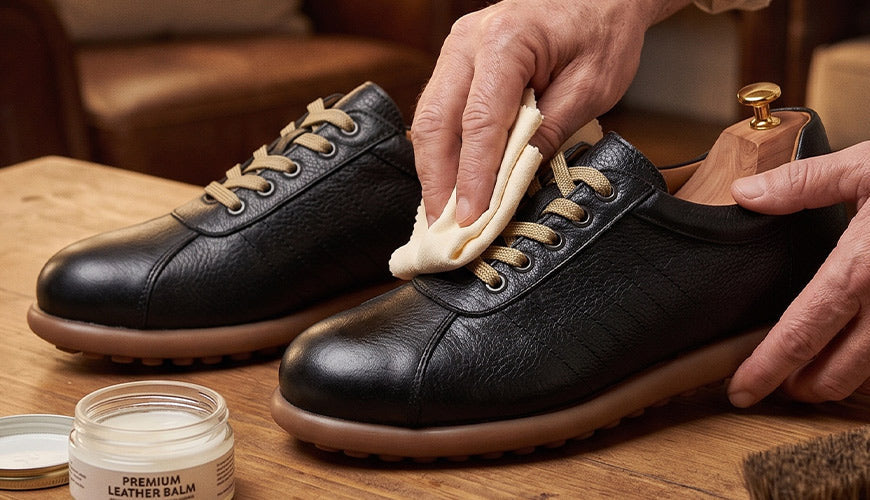
- Use a conditioner or cream to replace oils (thin layers, buff after).
- Add polish for shine and extra surface protection if you like.
Before Heavy Rain
- Apply a good protector (spray for suede and nubuck, waxy options for smooth leather).
- Check the wear on sole and heel edges so water doesn't start getting into the structure.
For a full leather routine, our care tips for keeping loafers looking new covers the essentials.
When Is It Time to Resole Your Leather Shoes?
The best time to resole is before you wear through the outsole.
How You Know It's Time
- The sole is thin at the ball of the foot.
- You can feel stones or pressure points through the bottom.
- The heel is worn down near the base.
- The edges are separating, or the stitching is loosening.
- Water gets in more easily than it used to.
Is Resoling "Worth It"?
It usually is when the upper leather is still strong (no big cracks), the shoe still fits well and feels good, the lining and insole aren't completely gone, and you genuinely enjoy wearing them. If you've found a pair that fits your foot perfectly, resoling can be one of the best things you do. Our article on cost vs long-term comfort explores why this pays off.
Repair or Replace? A Simple Filter
Usually Repairable
- Worn heel top pieces.
- Thin outsole (if the construction allows).
- Loose stitching in places.
- Scuffed toes and heels.
- Minor sole separation caught early.
Often a Sign to Replace
- The shoe no longer fits snugly (heel slips or structure collapses).
- Deep cracks in the upper leather.
- Badly broken-down lining that causes rubbing.
- A bent midsole or bad lean even after repair.
- A smell that won't go even after cleaning and drying well.
- An upper stretched too far to fix.
A helpful mindset: don't replace something just because the surface looks worn — wait until the structure is gone.
What to Expect by Shoe Type (UK Lifestyle Edition)
Office Shoes (Loafers, Brogues, Smart Flats)
Quality pairs can last years worn 2–3 times a week with care. Main wear points: heel edges (hard pavements), toe scuffs (busy days), and sole thinning (city and Tube walking). A well-made loafer is a good example of a repairable everyday shoe.
Leather Shoes for Daily Walking
If you walk 8,000–12,000 steps a day, the sole is the limiting factor. Rotation and rubber soles make a big difference.
Boots (Lace-Ups, Ankle Boots, Chelsea Boots)
Boots often last longer because they're more structured, uppers are usually thicker, and they're easier to rotate seasonally.
The Cost-Per-Wear Perspective
It's easy to fixate on price. The better question is: what does it cost each time you wear them? Compare a new cheaper pair every year or two against a better pair that lasts years with the occasional heel and sole repair. Even without doing the maths, the pattern is clear: durability, repairability, and rotation tend to win, especially for styles you wear a lot.
Habits That Wear Shoes Out Faster
- Wearing the same pair every day without letting them dry.
- Drying wet shoes on a radiator or in direct heat.
- Not conditioning leather, then wondering why it looks cracked.
- Letting the heel wear too far, damaging the heel block.
- Storing dirty shoes (grit acts like sandpaper).
- Using the wrong products, especially harsh cleaners.
- Buying the wrong size "because it'll stretch" (sometimes it does; often it just wears out faster).
A small change in habits beats a cupboard full of "replacement" pairs.
Buying Checklist: Picking a Pair That Will Really Last
Materials: supple but strong leather (not plastic); comfortable lining that doesn't feel thin or papery; a solid insole/midsole that feels supportive.
Construction: strong stitching, neat finishing, and stable heel construction — all signs a shoe is meant to be serviced; a sole you can realistically maintain in the UK (usually rubber, or leather with protection).
Fit: a secure heel that doesn't pinch; room for your toes to move, especially if you walk a lot; no "hot spots" you're hoping will go away.
If you're building a small collection of investment shoes, start with the pairs you'll wear most: a reliable everyday style, a smarter choice, and a boot that handles the weather. The "best" shoe is the one you'll actually wear. If you're weighing quality against synthetic alternatives, our comparison on vegan leather vs real leather is worth a read.
Frequently Asked Questions (FAQ)
If I wear leather shoes every day, how long will they last?
Daily wear speeds up breakdown considerably. Without rotation, many pairs struggle. Two pairs worn on alternating days can outlast one pair worn every day.
Do leather shoes crease quickly?
They crease because leather bends — that's normal. You want healthy, smooth creases, not dry ones that crack.
What's the single best thing I can do to make shoes last longer?
Rotate pairs and let them dry fully between wears. Brushing and conditioning leather occasionally protects against most damage.
How can I tell if my shoes can be resoled?
Resoleable shoes usually have stitched seams (you can often see the stitching or a stronger welt area). A cobbler can usually tell straight away from the bottom and edge.
Are rubber soles always better than leather?
Not always, but rubber usually handles UK rain and pavement wear better. Leather soles look smart for dressy occasions, but you may need to protect them if you walk a lot outdoors.
How often should I treat my leather shoes?
Every 6–10 weeks is common, depending on wear and weather. Do it more often in winter or if they get wet.
Can I fix scuffed toes and heels?
Often, yes. Cleaning, conditioning, and polishing handle a lot of scuffs. Deep gouges may need a professional, but they don't mean you have to bin the shoes.
When do I need new insoles?
If the insole or lining is breaking down and causing discomfort or rubbing, replacing or adding supportive insoles can extend the shoe's life — as long as it still fits well and is structurally sound.
Do expensive shoes always last longer?
Not always. Price can reflect design, branding, or limited runs. Materials, construction, and care all determine lifespan.
Should I repair shoes that are a few years old?
If you still like the fit and the upper leather is in good shape, repairs (especially heels and soles) are usually worth it. A good fit is hard to find.
How do I store leather shoes between seasons?
Clean them first, lightly condition, and use shoe trees if you can. Store in a breathable bag or box, away from moisture and direct heat.
Can rain ruin leather shoes for good?
One soaking doesn't have to, but repeated wetting without proper drying and conditioning can. Let them dry slowly, then reshape and recondition.
What's the bottom line on lifespan?
Good leather shoes aren't disposable. With a well-made pair, rotation, and care, you can expect years of use rather than months. Once you start thinking in repairs and resoles instead of replacements, "investment piece" stops being a catchphrase and becomes a genuinely useful way to shop.