
A Quick Summary
- Brush and air out your sheepskin regularly. Most "wear" starts with dust and moisture getting trapped in it.
- Don't dry sheepskin on a radiator or in direct heat. Slow air-drying keeps the hide supple.
- Spot-clean first; only do full washes as a last resort, and only if the care label allows.
- Use pH-balanced, wool-safe cleaners — not bleach, biological detergent, or fabric softener.
- Use a good protector spray on the suede/leather side, especially in wet UK weather.
- Remove odours by airing and gentle brushing; avoid strong perfumes that cling to fibres.
- Store clean, completely dry items in a breathable cotton bag, away from sunlight and moisture.
- Rotate slippers or boots to prevent matting and compression at high-friction points.
- Deal with stains quickly by blotting (not rubbing) and using as little water as possible.
- If in doubt, use a professional cleaner. Repairs and re-lining are usually cheaper than replacing.
Why Real Sheepskin Lasts (and Why It Doesn't Always)
Real sheepskin is a natural "two-in-one" material — soft wool fibres on one side, leather hide on the other. That structure is what makes it feel so good and keep you warm, but it's also why it needs care.
Three things cause most early signs of ageing:
- Heat from radiators, hair dryers, and tumble dryers can stiffen and shrink the hide.
- Trapped moisture (rain, condensation, wet hallways) makes odours and matted fibres more likely.
- Friction and dirt (grit acts like sandpaper) matts and thins the fibres over time.
The good news: regular, light care always beats occasional big clean-ups. If you want to understand the material itself first, our guide on real sheepskin vs synthetic alternatives is a useful companion read.
What Is "Real Sheepskin" — and What Isn't?
You'll see a few related terms on shoes and accessories:
Genuine sheepskin: the pelt with the wool still on it. Cared for, it's breathable, insulating, and naturally durable.
Shearling: in fashion, this usually means sheepskin shorn to a more even wool length. It's still real sheepskin — it just looks different.
Faux shearling or faux fur linings: synthetic fibres on a fabric backing. They may look similar at a glance but respond to care differently and often compress faster.
Whether you're buying sheepskin slippers, boots, gloves, insoles, earmuffs, bags, or trims, knowing how to care for them is the difference between "one season" and "many seasons." Our comparison on spotting real vs faux sheepskin can help you check what you have.
The Simple Care Kit That Makes Everything Easier
You don't need a cupboard full of products. A small kit usually covers it:
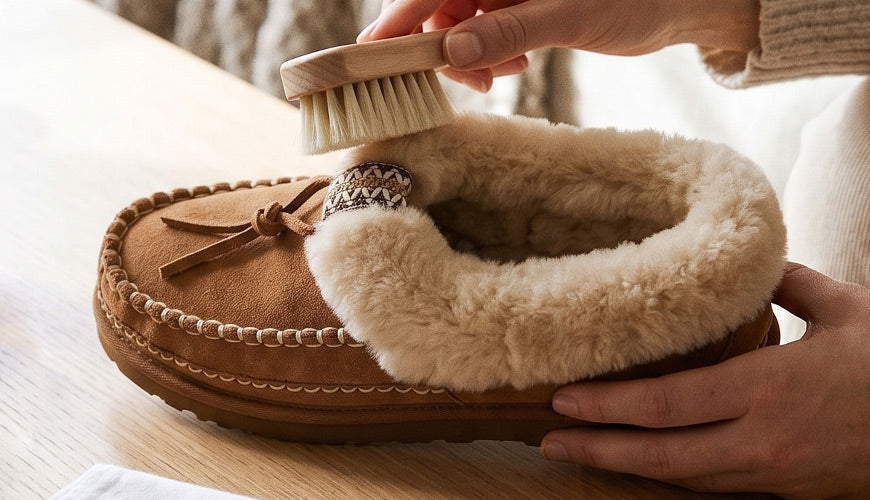
- A soft-bristle brush (or a dedicated sheepskin/wool brush) for regular fluffing and dusting.
- A suede brush and suede eraser (for the suede/leather side of many items).
- Clean white cloths (to blot and spot-clean without dye transfer).
- A pH-balanced wool and sheepskin cleaner (used sparingly, following dilution instructions).
- A towel (to absorb water).
- A breathable storage bag (cotton is best).
- A protector spray for suede and leather (patch-test first).
Daily and Weekly Habits That Quietly Add Years
These "boring" habits make the biggest difference.
After Each Use (30 Seconds)
- Shake out loose dust (especially from slippers and insoles).
- Air the item in a dry, well-ventilated spot away from direct heat.
- Relieve shape pressure: open boots fully; don't push them under a bench while still warm.
Weekly (2–3 Minutes)
- Lightly brush the wool in one direction, then against the grain to lift it.
- Check high-friction areas (heels, toe box, cuffs, bag corners) and brush those first.
- Wipe the suede or leather side with a dry cloth to remove dirt.
Monthly (or After Weeks of Wet Weather)
- If your item gets rained on or splashed (common in the UK), reapply protector spray. Always test on a small area and let it dry fully before use.
The Golden Rule: Dry Slowly, Never Fast
If your sheepskin gets wet — boots caught in the rain, a bag in a downpour — what you do matters more than the weather.
Step by Step: The Right Way to Dry Sheepskin
- Blot with a clean towel (press, don't rub).
- Reshape while wet: stuff boots with paper to support the toe and shaft, and smooth out cuffs and trims.
- Air-dry at room temperature with good airflow.
- Brush the wool once it's mostly dry to stop it clumping.
- Make sure it's completely dry before storing or wearing again.
Avoid radiators, underfloor heating hot spots, fires, hair dryers, and tumble dryers. Drying too fast can stiffen the hide and permanently reduce softness. Our guide on caring for sheepskin slippers has more detail on drying and refreshing.
Spot Cleaning: The Method You'll Use 90% of the Time
For most real sheepskin items, spot cleaning is safer than washing the whole thing.
For the Wool Side (Inside of Slippers, Linings, Trims)
- Brush first to remove dry dirt.
- Add a small amount of wool-safe cleaner to cool water (follow the product instructions).
- Dampen a cloth (don't soak it) and lightly dab the area.
- Blot with a clean cloth to lift moisture and dirt.
- Air-dry away from heat, then brush to fluff it up again.
Don't scrub hard — rubbing tangles the fibres and can create a felted patch.
For the Suede or Leather Side (Outside of Many Boots and Accessories)
- Use a suede brush to remove dirt and raise the nap.
- Use a suede eraser with light pressure to lift marks.
- If you need moisture, use a slightly damp cloth, let it dry, then brush again.
If your item is smooth leather rather than suede, use a different approach (a gentle leather cleaner and the right conditioner), but go easy on quantity and always patch-test. Our leather care tips apply to most smooth leather surfaces.
Handling Common Problems Without Panic
Winter Salt Lines and Pavement Marks
UK winters often mean grit and salt. If you see a light tide mark, let the item dry naturally first, then feather the edge of the mark with a slightly damp cloth (don't soak one spot). Air-dry, then brush. Our guide on removing salt stains from leather boots covers this in more depth.
Mud
Let the mud dry completely, gently brush it away, and only spot-clean if a stain remains.
Matting (Flattened Wool)
This comes from pressure and friction, not just "dirt." Brush gently but consistently. For tough spots, use short strokes and give the fibres time to recover between brushes. Rotate wear and avoid pressing the same points repeatedly.
Odour
Stored damp or worn a lot without airing, sheepskin can hold onto smells. Let it breathe in a dry room (not outside when it's wet), brush to lift fibres and release odours, and avoid spraying strong scents directly on wool — they can linger and combine into a worse smell over time.
Can You Machine Wash Sheepskin?
Only if the item's care label says so — and even then, cautiously.
If it's machine washable, use a cool temperature and a gentle spin for wool/delicate items, use a wool-safe cleaner (no biological detergent or softener), and let it dry slowly, then reshape. For most structured items — boots, bags, and accessories with stitching, trims, or hardware — spot cleaning and professional cleaning are the safest routes.
The UK Damp Challenge: Rain and "In-Between" Seasons
British weather is rarely extreme in one direction — it's usually wet, mild, and changeable. That matters because dampness is more likely than deep snow, and dampness is what makes odours and matted fibres develop.
Useful tips to stay ahead:
- Use a protector spray suited to the outer material (suede or leather). Patch-test first.
- If you can, avoid wearing delicate sheepskin on days with heavy, prolonged rain.
- If you do get caught, use the slow-dry method and don't try to "speed it up."
For more on choosing the right footwear for British conditions, see our guide on how British weather changes your shoe choice.
Caring for Different Sheepskin Items and Accessories
Sheepskin Slippers
Slippers face daily wear, warmth, and indoor dust. Air them out after use (especially if worn barefoot), brush the wool footbed weekly to stop it flattening, and clean the inside only where needed, not the whole pair.
Sheepskin Boots
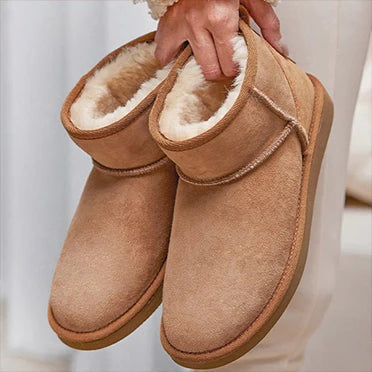
Boots face weather, pavement grit, and toe creases. Brush the outside after wet commutes, use shoe trees or paper stuffing to hold shape while drying, and reapply protector to the outer material more often in winter.
Small Accessories, Gloves, and Earmuffs
Smaller items pick up oils from hair and skin products. Spot-clean carefully (don't soak), let them air-dry fully before returning them to drawers, and keep them out of direct sunlight (windowsills slowly fade and dry things).
Bags, Trims, and Decorative Panels
These often combine materials (sheepskin, leather, hardware). Keep water to a minimum, clean each section appropriately rather than using one "all-over" method, and consider professional cleaning for expensive or structured pieces.
What You Do in Spring Affects Autumn: Storage
A lot of "mystery damage" comes from poor storage.
The Ideal Storage Checklist
- Clean first, even lightly — stains can set over months.
- Make sure the item is completely dry.
- Store in a breathable bag (cotton), not sealed plastic.
- Avoid damp basements, hot airing cupboards, and direct sunlight.
- Don't stack too high, which can crush the wool.
If items come out feeling stiff, flat, or musty, don't cover it up — air them out, brush them, and address the issue.
When to Use a Professional Cleaner (and Why It's Often Worth It)
Call in a professional when the item is very dirty or soaked through, when the piece is structured (bags, detailed boots) and can change shape when wet, when you're dealing with dye transfer, oil stains, or unknown marks, or when the sheepskin is sentimental or a significant investment.
A professional clean can restore loft and remove tough stains without harming the hide — often cheaper than replacing a well-made item. Our article on cost vs long-term comfort explores the value of maintaining quality pieces.
Common Mistakes That Wear Sheepskin Out Faster
- Using heat to dry faster (radiator, hair dryer, tumble dryer).
- Over-wetting a small stain, leaving rings and tide marks.
- Using harsh cleaners — bleach, strong detergent, or non-wool stain removers.
- Storing it damp or in sealed plastic.
- Scrubbing the wool instead of dabbing and brushing.
- Ignoring grit on the outside (it wears down the nap over time).
Avoid these and you're already doing most of what "sheepskin experts" do.
Buying with the Future in Mind
Care can only do so much if the materials are poor. When choosing real sheepskin pieces, consider the wool's density and spring (it should bounce back when brushed), how even the finish is (patchy or thin areas may wear faster), good stitching and edging (stress points should feel secure), and a design suited to your daily life (if you wear trainers and commute in the rain, pick accordingly). Our guide on why sheepskin boots are worth the investment covers what to look for.
Frequently Asked Questions (FAQ)
How often do I need to clean real sheepskin?
Most of the time, brushing and airing is all it needs. Spot-clean only when necessary, and save deep cleaning for refreshing an item or fixing a specific problem.
Can I wash sheepskin with regular laundry detergent?
No. Regular detergents can strip natural oils and leave residue that makes wool feel rough. Use a wool- or sheepskin-safe cleaner instead.
Why does my sheepskin feel stiff after getting wet?
Usually because it dried too fast or too close to heat. Drying slowly and reshaping helps keep the hide flexible.
How do I make matted sheepskin fluffy again?
Once fully dry, brush gently and consistently. Focus on high-friction areas and don't scrub hard, as that can damage the wool.
Is it okay to spray perfume or deodorant inside sheepskin slippers?
Light sprays are fine, but heavy sprays can cling to fibres and leave a lasting smell. Brushing and airing are safer first steps.
Can I make sheepskin boots water-resistant?
A good protector spray can help shield the outer suede or leather (patch-test first). No spray makes sheepskin invincible — keeping it dry and clean is the best protection.
What do I do if my sheepskin gets muddy?
Let the mud dry completely, then brush it away. If a mark remains, spot-clean it. Rubbing wet mud usually pushes it deeper into the fibres.
How do I store sheepskin accessories over summer?
Clean lightly, dry completely, and store in a cool, dry place away from direct sunlight in a breathable cotton bag. Avoid sealed plastic.
Does washing sheepskin shrink it?
It can, especially with heat or agitation. If the label allows washing, use cool wool settings and dry slowly, reshaping as it dries.
When is it best to have sheepskin professionally cleaned?
If it's soaked through, heavily stained, structured (bags or boots), or you don't know what caused a mark. Professional cleaning can prevent damage while restoring the piece.