
When people in the UK think about camping or glamping, comfort usually comes to mind first: real beds or sleeping mats, hot showers or a wash bowl, a café on site or a camp stove. But one thing quietly decides whether the trip feels restorative or slightly miserable: what you wear on your feet.
The UK's "four seasons in a day" reputation isn't just talk. Damp grass, muddy paths, chilly evenings, and sudden downpours can turn a beautiful place into a test of your shoes. The good news is you don't need a huge suitcase or high-tech gear. You need a small, smart selection of shoes suited to the differences between glamping and camping — plus a few easy ways to care for premium materials so they keep looking good.
A Quick Overview
- Glamping usually means more time in and around your accommodation, so you'll want comfortable, easy on-off shoes.
- Camping usually means more walking, carrying, and wet ground, so traction, waterproofing, and quick-drying matter more.
- A "3-pair plan" works for most UK staycations: a weather-ready day pair, an easy site slip-on, and a warm, cosy evening pair.
- Put soles first: on slick, uneven, or grassy ground, grip and stability matter more than style.
- Match materials to moisture: treated leather for changeable weather, protected suede for dry spells, real sheepskin for warmth when you're still.
- Pack for changes: dry socks, a small brush, and a water-repellent protector make premium shoes far more useful outdoors.
- Avoid common mistakes: unworn-in new boots, moisture-holding cotton socks, and drying shoes too fast near direct heat.
- A little care goes a long way: clean mud early, dry slowly, then reprotect.
- For regular staycations, buying fewer, better-made pairs and caring for them is usually the most sustainable approach.
Glamping vs Camping: What Changes for Your Feet?
What Is Glamping?
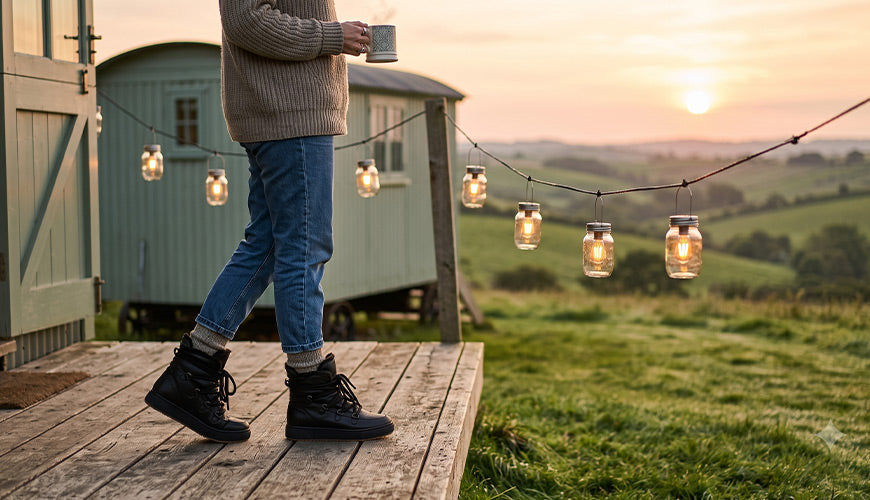
Glamping (glamorous camping) usually means staying in a yurt, bell tent, shepherd's hut, or eco pod at a fixed location. You typically get a bed, proper flooring, electricity, and sometimes heating. You still step out into real weather, but you're less likely to hike with a full pack.
What Is Camping?
Camping usually involves pitching a tent, more time on uneven ground, more use of shared facilities, and more back-and-forth to water points, toilets, showers, parking, or nearby trails. When carrying things, moving in the dark, or crossing wet grass, even short distances add up.
The Real Difference
- Glamping: comfort, ease, warmth, and quick transitions matter most — coffee runs, fireside sitting, short walks, standing and chatting.
- Camping: stability, safety, and durability matter most — pitching, carrying, wet mornings, muddy paths, and longer walks.
The UK Staycation Reality Check: Ground, Weather, and Daily Life
Before choosing shoes, think about the surfaces you'll actually walk on:
- Wet morning grass (quickly soaks trainers)
- Gravel paths (easy to slip on with thin soles; hard on feet)
- Wood decking around pods and showers (surprisingly slick when wet)
- Mud near pitches, especially after a busy weekend
- Sand and coastal paths if you're heading to Cornwall, Wales, Norfolk, or the Scottish coast
- Cold nights when temperatures drop quickly after you stop moving
Extreme cold isn't the main issue — it's the combination of wetness and stillness. Luxury shoes can absolutely be worn outdoors in the UK, but you have to choose the right outsole and care for the uppers properly. For a broader look at how UK weather affects footwear, our guide on the best winter boots for UK weather is a useful companion read.
The "3-Pair Plan" for Luxury Shoes That Works
Pack one pair and it will get wet at some point. Pack five and you'll resent your luggage. Three pairs is the sweet spot for most UK glamping and camping trips.
1) Your Daytime Workhorse (Weather-Ready)
This is the pair you walk, drive, and explore in — the one you rely on when the ground shifts.
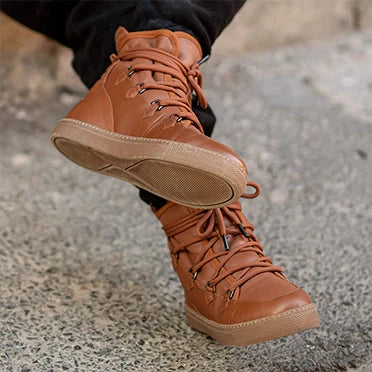
- For camping: a supportive boot with good grip and water resistance.
- For glamping: a smart boot that handles grass and gravel without looking like hiking gear.
Look for a stable sole, good tread, a secure heel fit, and enough structure to stop your foot sliding forward on slopes.
2) Your Easy "Site Shoe"
Keep this pair by the door for quick trips outside — the loo, the bins, firewood, breakfast, or a weather check. You want easy on-off and a sole that won't slip on wet decking.
3) Your Cosy Evening Pair (Warmth and Recovery)
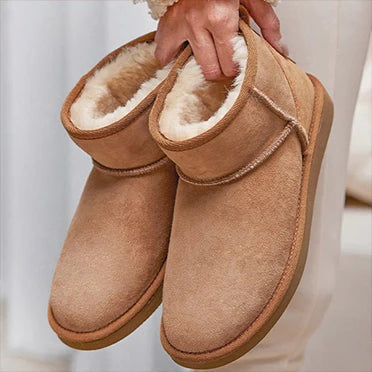
This is where real comfort shines: back inside, washed up, ready to relax. A warm, breathable lining like real sheepskin feels far better than sweaty synthetics — especially with clean, dry socks (or barefoot, depending on your preference and the weather). Sheepskin slippers are ideal here.
Choosing Materials for UK Staycations
Leather: The Smart "Luxury for All Seasons"
The UK's stop-start weather suits high-quality leather well. It's durable on its own, and when treated, it's more forgiving in light rain and wet grass than many fabrics. If you want one premium pair for multiple staycations, leather is often the most versatile choice.
Note: leather needs occasional conditioning and protection, especially after it gets wet and dries out. Our guide on keeping leather shoes looking new covers the basics.
Suede: Stylish but Needs Protection
Suede looks high-end, cosy, and considered — great for glamping. The downside is that untreated suede doesn't like water or stains. If you love suede, treat it seriously: protect it, brush it, and don't treat it like a welly. Pack a small suede brush and a water-repellent protector before you leave.
Real Sheepskin: Warmth and Comfort When You Stop Moving
Real sheepskin is excellent for evening and indoor-outdoor comfort because it doesn't feel "clammy" like some synthetics. That matters more than you'd think for UK nights — you often want warmth while sitting still, not just while walking. If you'll be going in and out a lot, pick sheepskin footwear with an outsole made for light outdoor steps. Our article on how natural sheepskin protects against cold explains why it works so well.
Soles: Where Luxury Meets Practicality
In the UK, the sole is the difference between "cosy weekend" and "why did I nearly fall over twice today?" For camping on mixed ground, a deeper tread and slightly firmer sole usually work better. For glamping, you can go a little sleeker — but don't wear smooth fashion soles if rain looks likely. Our sole material guide can help you match sole to terrain.
Choosing the Right Fit for Staycations
Premium shoes feel better when the fit is right, but camping-style movement magnifies small problems.
- Allow room for socks. It can get cold even when glamping. Make sure your main boot fits with a thicker sock.
- Watch for heel slip. If your heel lifts when you walk, it will rub faster on rough ground.
- Don't "hope it'll soften." Some things improve, but a bad fit rarely fixes itself over a weekend.
- Break them in first. Wear boots around the house and on a local walk before you leave.
The Glamping Footwear Edit: Comfort First, but Still Practical
Luxury shoes are perfect for glamping because you're not trying to "survive" the environment — you just want to enjoy it.
Your Ideal Glamping Lineup
- Smart, weather-ready boots for arriving, exploring nearby villages, and short walks.
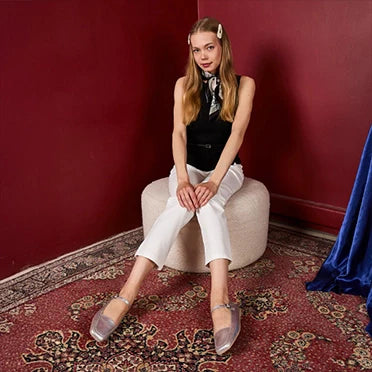
- Easy slip-ons for the terrace, log runs, and shared facilities.
- Slippers to keep feet warm morning and night.
Things to Watch
- Decking and wet boards: choose slip-ons with grip.
- Firepit smoke and ash: keep suede away from sparks and brush it off afterwards.
- Hot tubs and spa areas: bring a water-friendly option (even simple shower slides) to keep your expensive pairs pristine.
Style Without the Worry
In glamping photos, your shoes should look intentional, not out of place. The trick is choosing quality materials with practical soles, then using protective products so you don't panic every time you step on wet grass.
The Camping Footwear Edit: Function and Comfort First
Camping is harder on your feet because of uneven ground and more repetitive walking, often with weight.
Your Ideal Camping Lineup
- Boots that provide support, grip, and water resistance.
- Slip-ons for quick night and morning use.
- Comfortable shoes for relaxing in the tent or under an awning.
Comfort Tips That Feel "Luxury" in Real Life
- Two-sock strategy: one pair for the day, a completely dry pair for the night.
- Foot recovery matters: even without hiking, standing on hard ground all day tires feet. A warm, cushioned indoor pair isn't a luxury — it's smart packing.
- Plan for wet weather: assume at least one pair will get wet, and build your kit around that.
How to Protect Premium Shoes Outdoors
A lot of people skip this part and then wish they hadn't.
Before you leave:
- Apply a water-repellent protector suited to the material (especially suede).
- Lightly condition leather so it doesn't dry out when it rains.
- Check the sole and stitching — a small issue can escalate quickly outdoors.
On the trip:
- Clean mud early. Dried mud is harder to remove and can leave marks.
- Dry slowly. Stuff boots with paper, change it if it saturates, and dry away from direct heat.
- Rotate pairs. Even a few hours of drying time helps.
After the trip:
- Brush suede once it's dry.
- Clean and condition leather as needed.
- Reapply protection so they're ready for the next trip.
Packing List: Small Things That Make a Big Difference
- 2–3 pairs of socks, at least one warm
- Plasters or blister pads, just in case
- A small brush (suede brush if needed)
- A water-repellent protector (travel size if possible)
- A microfibre cloth for quick wipes
- Spare laces if you're walking in boots
Common Mistakes (and How to Avoid Them)
Debuting New Boots on the Trip
Take a few short walks to break them in. Camping won't forgive tight spots.
Relying Only on Trainers as "Outdoor" Shoes
Trainers are fine when dry, but they soak through fast in wet grass and mud, and don't always grip slick surfaces.
Bringing Only "Pretty" Soles for Glamping
There's still wet ground when glamping. Pretty shoes are fine — just make sure they have grip and protection.
Drying Premium Shoes Too Fast
Direct heat can stiffen leather, shrink some linings, and warp shape. Slow drying wins.
Forgetting How Cold Nights Get
The UK cools quickly once the sun goes down. A comfortable warm pair of shoes is one of the easiest upgrades to your evening.
A Note on Sustainability: Fewer Pairs, Better Care, Longer Life
For regular staycations, the most sustainable approach is usually buying fewer pairs you genuinely love and caring for them properly. High-quality materials can last for years with the right care. Looking after a great pair you already own is often the best "upgrade" you can make. For more on this, our article on why sheepskin boots are worth the investment explores the long-term value.
Frequently Asked Questions (FAQ)
Do I need waterproof shoes for UK glamping?
You don't always need fully waterproof boots, but you do need water-resistant ones with good grip. Even when it isn't raining, grass and paths are often wet.
Is suede a bad idea for a UK staycation?
Not necessarily. If you protect suede before use and brush it afterwards, it can work well for glamping. Leather is usually easier to manage for wet-weather camping.
How many pairs should I bring for a weekend?
Three is a good rule for most people: a daytime pair, an easy site slip-on, and a warm evening pair. If travelling light, two can work as long as one dries quickly and you pack extra socks.
Can I wear sheepskin slippers outside at the campsite?
Yes, if the slippers have an outsole built for light outdoor steps. Don't wear delicate indoor-only slippers on muddy paths.
What socks are best for camping comfort?
Moisture-managing, quick-drying socks are usually most comfortable on multi-day trips. Many people avoid pure cotton in wet conditions because it stays damp.
Can I wear leather boots in the rain?
When treated and cared for, leather handles rain well. Without care and with repeated soaking, leather can dry out and stiffen over time.
What shoes are best for coastal staycations?
A supportive shoe or boot with good grip is usually most useful for mixed sand, paths, and changing weather. If you expect beach showers or rocky edges, bring something that can get wet.
How do I stop boots smelling while camping?
Rotate shoes if you can, change socks, let boots air out, and don't store wet shoes in sealed bags. Dry slowly and completely when possible.
What's the best way to dry wet leather or suede?
Remove surface moisture, stuff with paper to hold shape, and dry at room temperature away from direct heat. Brush suede and condition leather as needed once dry.
If I already have boots, should I bring a "camp shoe"?
Yes, usually. A slip-on makes night trips easier, gives your feet a break, and helps your main boots dry out between uses.
Are ankle boots enough for camping, or do I need walking boots?
It depends on distance and terrain. With grip and support, ankle boots can be enough for light camping and short walks. A walking-style boot with more support usually feels better for longer walks or rough ground.
How do I restore premium shoes after a muddy weekend?
Clean first, then dry slowly. After that, use the right brush and protection products. A quick post-trip routine restores premium materials far better than letting dirt sit.