
A ski trip can turn things that are "nice to have" into things you can't live without. You realise that comfort isn't a luxury when you first step off a transfer coach and onto packed snow or stand in a queue for a gondola while the wind finds every hole in your clothes. Going back to your room early or exploring the village after skiing makes a difference. People from the UK often leave for ski trips early, take a long time to get to the resort, and have to walk around the resort a lot. That's when the right shoes are most important. Ski boots are great for skiing, but they're not good for walking to the bakery, carrying skis to the lift, or hanging out at après. This is when sheepskin boots are very useful.
A Quick Summary
- You need shoes that work off the slopes for ski vacations, like for transfers, walks in the village, icy sidewalks and after skiing.
- Sheepskin boots are usually warm, breathable, and comfortable to wear for a long time, especially when it's cold and dry at a resort.
- Make sure the soles grip, the shape keeps your heel in place, and there's enough room for a winter sock without being too tight.
- Pick out winter boots and make sure they are safe before you leave.
- Make sure they are comfortable (from the ankle to the middle of the calf), easy to put on and take off, and have a stable sole for slushy afternoons.
- Don't make these mistakes: getting boots that are too small, wearing them for the first time at the resort, or not using protection sprays.
- Put on socks that wick away moisture with your sheepskin boots, and keep a dry pair in your day bag.
- How you dry them is very important. Don't put them near direct heat, and use boot trees or paper to keep their shape.
- Pack better: instead of bringing a lot of fashion boots that aren't ready for winter, bring one "village" boot that you know will work.
Taking care of your boots (before, during, and after) will keep them looking good all year.
Why Ski Trips Are Hard on Everyday Shoes
Ski resorts are pretty, but they can be tough on shoes. You will still have to walk a lot in the snow and slush, even if you stay at a place where you can ski in and out.
The Resort “Weather Mix” People Don’t Expect
Most people think of snow that never stops falling. In reality, you may have to deal with changing conditions in a single day:
- Cold and dry in the morning (crisp snow, very low temperatures).
- The sun at noon (melting on paths that are open and wet).
- Slush in the afternoon, especially near lifts, parking lots, and village streets.
- Refreeze at night (wet spots become slick).
This type is why a warm lining alone isn't enough. You need a plan for comfort, moisture, and grip.
The Real Off-Slope Schedule
A typical day might include:
- Walking from where you are staying to the ski bus or lift.
- Wearing gloves while carrying gear like helmets, skis, and bags.
- Standing still in a queue or at a meeting point.
- Terraces for after-skiing where your feet cool off quickly.
- Walks at night to get dinner, groceries, or medicine.
Everything is harder when your feet are cold or hurt. The right boots will quietly take away the friction from your vacation.
What Are Sheepskin Boots?
What Kind of Sheepskin Do Boots Use?
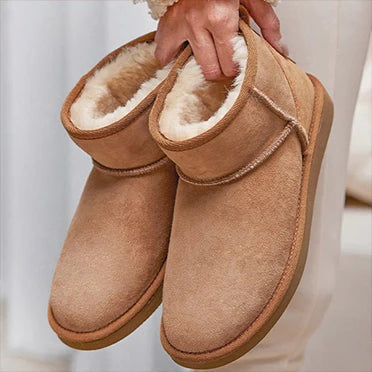
Sheepskin boots are winter boots made of sheepskin (with the fleece side on the inside), which makes the inside soft and naturally warm. The outside of many designs is made of suede or a similar leather, while the inside is soft and warm.
Sheepskin vs Synthetic Linings: What Feels Different?
A lot of synthetic linings work by trapping heat, but they can feel damp when you go from a warm room to a cold one. In many everyday winter situations, sheepskin is known for being warm and breathable at the same time. That matters on ski trips when you go from warm chalets to shops to freezing streets.
To keep your hopes in check, remember that no boot is "perfect for everything". The goal is to pick a pair that fits your resort routine and take care of them so they keep working well.
Why Sheepskin Boots Work So Well for Ski Holidays
There are a lot of winter boots out there, but sheepskin boots are the best for ski trips because they're warm enough to stand around in, comfortable enough to walk in, and easy enough to wear every day.
Warmth Without Feeling Heavy
One common packing mistake is thinking you need the biggest boots you can find. Heavy boots can be tiring, especially when you already have gear on. A lot of sheepskin styles are warmer and more flexible than some traditional snow boots, which can make them easier to wear in the village.
Comfort for Long, Slow Days
There is a lot of "in-between" time on ski trips. Walking on packed snow works different muscles than regular exercise, and any sore spots or rubbing points show up quickly.
The insides of sheepskin shoes are often soft on the foot, which is nice if you tend to get hot spots. Still, it's best to choose a shape that supports you and not just one that is soft.
Breathability for the “Hot Then Cold” Cycle
Cafés, supermarkets, and warm indoor spaces are all part of resort life. When you go back outside, boots that hold moisture can feel bad. In many cases, the natural structure of sheepskin makes it easier to deal with the "hot then cold" cycle than fully synthetic options.
Après-Friendly Style (Without Hiking-Boot Vibes)
At dinner, not everyone wants a technical mountaineering boot. Sheepskin boots go well with jeans, leggings, knitwear, and winter coats, so they're an easy "one pair" solution for evenings. It's worth looking at a few different pairs of winter-ready sheepskin boots and comparing their features instead of just picking one based on how it looks.
How to Choose the Best Sheepskin Boots for a Ski Trip
People often make the mistake of buying sheepskin boots as if they were slippers for the house. You want more from them for a ski vacation.
Fit: Circulation Matters for Warm Feet
If your boots are too tight, they can make your feet feel colder because they cut off circulation.
Set your sights on:
- A secure heel (little lift when you walk).
- Room for your toes to move around.
- Room for a winter sock without squishing the lining.
Sock Strategy (Don’t Just Go Thicker)
A well-designed winter sock is not always better than a thick sock. Think about:
- Medium-weight wool blend socks that keep your feet warm and dry.
- Don't wear socks that are too tight and squeeze your foot.
- Bring an extra pair of shoes in your day bag for comfort after skiing.
Sole & Traction: What Keeps You Safe
Find a sole that will grip on snowy and icy sidewalks. Important signs are:
- Defined tread (not smooth fashion soles).
- A base that is stable and not too soft.
- A pattern or edge that is a little higher up and helps on packed snow.
When you're at the resort, you often walk on a mix of grit, ice, and wet stone. Good traction lowers the chance of slipping, especially when the ground freezes again in the late afternoon.
Ankle vs Mid-Calf vs Tall Boots
- Ankle boots can be easy to wear and pack, but if you step off the cleared path, they might let snow in.
- Mid-calf is a good place to find a balance between warmth and protection.
- Tall boots can be very warm, but make sure they don't make it hard to move or feel too heavy.
Water Resistance: Set Realistic Expectations
A lot of sheepskin boots, especially those with suede outsides, are not automatically "snowproof". That doesn't mean you can't wear them when you go skiing. It means you have to:
- If you can, pick a pair that is meant for use outside in the winter.
- Put on the right protector before you travel.
- When you can, stay away from deep slush and puddles.
If you think your resort will be wet and slushy (which happens a lot later in the season or in lower villages), you might want to bring a second option that is more focused on water. But for many travellers, one pair that is well-protected is enough for normal village conditions.
Easy On/Off: Convenience Counts
It can be annoying when your laces get tangled up with your gloves, helmet hair, and lift pass. Zippers, pull tabs, or simple closures can make a big difference.
A good transition line to remember is that the easier your kit is to use, the more energy you have for the fun parts.
When to Wear Sheepskin Boots on a Ski Trip
You can think of sheepskin boots as your "off-slope uniform".
Travel Days (Airport + Transfers)
It's not the time to wear stiff new boots at the airport, on the way to the airport, or when checking in. Sheepskin boots are usually comfortable for:
- Leaving the UK early.
- Long coaches for transfers.
- Short stops where you step into cold air for a short time.
If you're flying with hand luggage, comfortable boots can also help you avoid having to bring a lot of heavy pairs.
Resort Mornings (Coffee Runs + Ski School)
Warm boots can help you get over the cold when you're walking to meet friends, dropping kids off at ski school, or getting coffee before the lifts.
After Skiing & Evenings
After skiing, your feet often feel more sensitive. If you have a warm, comfortable pair of boots, you can enjoy your dinner plans without feeling like you need to change again.
What to Pack With Your Boots for a Ski Trip (2026 Checklist)
Sheepskin boots are a big deal, but they work best when they are part of a small, sensible system. Here are some things that go well with them, especially for people from the UK who might get cold on the way to their destination and then have to deal with temperature changes at the resort.
Clothing That Helps
- Two pairs of good winter socks (switch them out and let them dry properly).
- Thermal base layers for the evenings if you get cold easily.
- A warm middle layer (like fleece or wool) for walks in the village.
- A good waterproof outer layer for days when it's snowing or slushy.
- A hat and gloves that you can really use to lift passes.
Little things that make everything better.
Small Items That Make a Big Difference
- Blister plasters (new terrain can rub even with comfortable boots).
- A dry sock in your day bag.
- Lightweight insoles if you want more support.
Keeping your kit in order.
- A soft shoe bag to keep your boots and clean clothes separate in your suitcase.
- A small microfibre cloth to clean your wet boots in your room.
- A small spray to protect your things if you need to add more during your trip (check the rules for flying).
The “Do Not Pack” List
- Several fashion trainers that don't grip on snow.
- Soles that are very flat and have no tread.
- New boots are available that do not require a break-in period.
- Boots that look comfy but have no shape (your feet will notice by day two).
Another transition line: Ski trips tend to feel calmer when you pack fewer, better things.
Common Mistakes With Sheepskin Boots in the Mountains
It helps to be honest here. Most problems with boots are the same few that constantly happen.
Buying Too Small Because “They’ll Stretch”
Some boots do get softer with use, but it's not safe to rely on stretching. If your toes are already cramped at home, they will probably feel worse in the cold.
Skipping Protection in Wet Snow
You shouldn't try out your boots in slush at a ski resort. Before you go, make sure they're safe and don't stand in puddles at the base station.
Drying Them on a Radiator
Direct heat can damage natural materials, causing the upper part of the boots to stiffen or bend. If your boots get wet, let them air dry slowly.
Treating Them Like Deep-Snow Boots
Sheepskin boots can be ideal for living in a village, but they aren't always made for walking through deep, wet snow. If you think you'll need a lot of that, bring a more technical pair as well.
How to Care for Sheepskin Boots Before, During & After the Trip
Taking care of your boots is what makes them last year after year.
Before You Leave: Prep Steps
- Gently brush the outside to get rid of dust and raise the nap, especially if it's suede.
- Use a protector that is right for the material.
- Let them dry completely before putting them away or wearing them.
- Wear them for short walks at home to see how they fit and how comfortable they are.
If you're making a winter care plan, think about adding a protector and a soft brush to your at-home kit so you don't have to rush the day before you fly.
During the Trip: Daily Habits
- When you get in, use a soft cloth to wipe off salt, grit, and slush.
- Don't put your boots in a bag overnight; let them breathe.
- If they are wet inside, loosely fill them with paper to soak up the water.
- Change your socks, and don't put wet feet back into your boots.
What about the smell?
Days at the resort can be long. Breathable materials can help, but it's still a good idea to air out your boots. If you use deodorants, make sure they are safe for natural linings and don't have strong scents that last a long time.
After the Trip: Refresh + Store Properly
When you get home:
- If there is still some moisture on the boots, allow them to air dry completely.
- Brush the outside to make the finish look new.
- If you plan to wear boots in the winter, put on more protection.
- Store in a cool, dry place away from direct sunlight and heat. Boot trees or paper can help keep their shape.
Your boots spend most of their lives in storage if you only ski once a year. After the trip, a little care and maintenance prepares your boots for the next season.
Buying Sheepskin Boots More Responsibly
Many people who shop now want warmth without having to buy things that only last one winter. The most sustainable way to shop is to buy things you will wear, care for, and keep.
Longevity Is the Real Goal
When a boot fits well, has a good sole, and receives proper care, it tends to remain in use. If you're thinking about getting sheepskin boots for your ski trip, consider them to be a winter must-have that can be used for many things:
- Cold snaps in the UK and school runs
- Walks on frosty mornings on the weekend
- Days of travel when comfort is important.
If you want a small winter wardrobe that works hard, it's a good idea to start with one pair of boots that you know will last.
Choosing on Pegia.com (Without Overthinking)
When you're looking around, pay attention to the things that are important for your trip:
- Will you spend a lot of time walking around the resort, or will you mostly stay near the lifts?
- Are you going early in the season (when it's colder and drier) or later in the season (when it's often wetter)?
- Do you want a sleek shape for the evening or the most useful shape?
If you're not sure, start by looking through a winter footwear edit.
Questions and Answers (FAQ)
Are sheepskin boots warm enough for the slopes?
Yes, in many cases, they are suitable for wear off the slopes. They work well in cold village conditions, especially when you wear excellent socks with them. If the snow is very deep or the ground is very wet, you might want a second, more technical boot.
Can I wear boots made of sheepskin in the snow?
You can, but it depends on the material, construction, and protection of the boot. It helps a lot to use the right protector and stay away from deep slush.
Should I get bigger socks if they're thick?
You usually want enough room for a winter sock without losing grip on the heel. If your heel slips when you size up, try a different sock thickness or an insole instead of going bigger.
Are boots made of sheepskin good for icy sidewalks?
Yes, as long as the sole has the right tread. The lining isn't the most important thing here; traction is.
How do I keep salt and slush from staining my sheepskin boots?
After you wear them, wipe them down, don't let salt sit on the surface, and put on a waterproof protector before you leave. If you see marks, brushing gently (for suede) and cleaning carefully can help. You’ll find a step-by-step solution in our Pegia sheepskin boot care guide.
Can I use a hair dryer or a radiator to dry my sheepskin boots?
Avoid direct heat whenever possible. Let them air dry naturally, away from radiators, and use paper or boot trees to help them keep their shape.
What kind of socks go best with sheepskin boots?
A medium-weight wool blend sock is often a good choice for warmth and comfort. Don't wear socks that are so tight that they cut off blood flow.
Are sheepskin boots too warm to wear inside?
In heated rooms, they can feel warm, especially if you wear them for a long time. Many people think they strike a good balance between warmth and breathability, but this depends on the style of the boot and what you like.
Can I wear sheepskin boots while driving in a resort?
Some people do, but make sure the sole and shape don't get in the way of how the pedals feel. A slimmer, more flexible boot may be more comfortable if you drive a lot.
How do I pack my sheepskin boots for a ski trip?
Put them in a shoe bag, keep them away from wet things, and think about lightly stuffing them with socks to help them keep their shape. If you're flying, wearing them on the day you travel can save space in your luggage.
Final Thoughts: A Small Upgrade That Changes the Whole Trip
Skiing should be fun, not tiring. Everything is easier with warm, comfortable feet: the walk to the lift, the coffee break, the evening plans, and even the trip home. For a lot of people who travel to the UK, sheepskin boots are more than just a cosy accessory; they are the shoes they wear off the slopes that help the week go smoothly.
You will probably reach for them long after the last ski day if you get a pair with the right sole, fit, and protection plan. If you want to start with one reliable choice, look into sheepskin styles made for winter wear. You might also want to add a simple care routine to keep them ready for every cold-weather trip.