
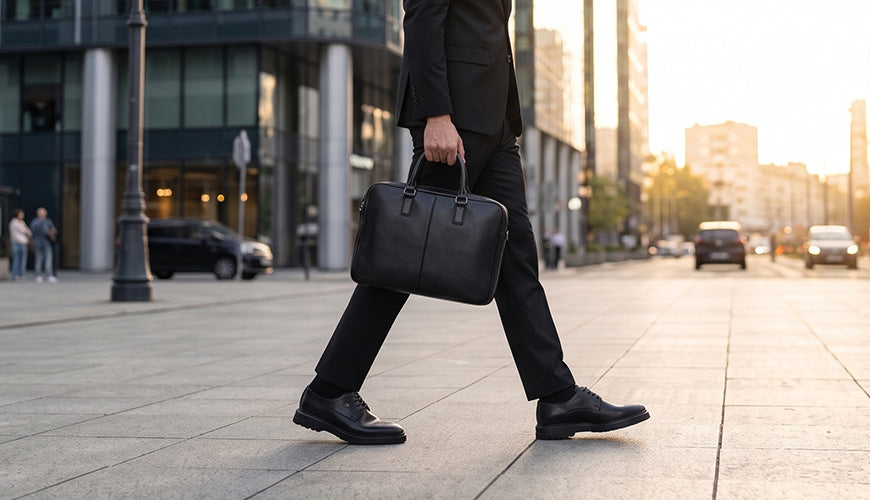
A Quick Overview
- Put a stable fit (secure heel, enough toe room) ahead of "breaking them in later."
- Pick versatile styles: penny loafers, plain-toe Derbies, Chelsea boots, chukkas, or smart trainers (if your office really allows them).
- The sole is usually the most important "all-day" upgrade in the UK. Look for grippy rubber or a discreet rubber topy over leather.
- Smooth leather is best for polishing and travel scuffs; suede is best for pub gardens on genuinely dry days.
- Use colour wisely: black for more formal offices, dark brown for maximum flexibility from day to night.
- Carry a small travel kit — shoe wipes, a small brush, a cloth. It will save your evening plans.
- Avoid extremes: ultra-pointed toes, very thin leather soles, or too-chunky hiking treads all limit versatility.
- Protect early: spray with water-repellent (especially suede) before first wear.
- Rotate when you can — even one day off helps shoes dry out and hold their shape.
The Modern Brief: One Pair, Three Jobs
"Office to evening" sounds like a style phrase, but it's really a performance brief. Your shoes need to do three things well: look appropriate at work, stay comfortable and presentable during the commute, and still feel right when the mood drops a notch — a friend's birthday, a pub garden, or a casual dinner.
The key isn't finding a shoe that's "perfect" in every situation. It's picking a pair that looks right everywhere and never looks out of place.
Job 1: Work — Smart Enough to Not Draw Attention
Most UK offices now sit somewhere between formal and smart casual. Unless your workplace requires a suit and tie, aim for shoes that say "considered" rather than "ceremonial."
Look for: clean lines (less stitching, fewer visual tricks), a modern but not extreme toe shape, and leather that can be quickly polished back to looking fresh.
Avoid: overly shiny "occasion shoes" that look too dressy after 6 p.m., and very fragile soles if you walk between meetings.
Job 2: The Commute — Comfort That Isn't Obvious
Travel comfort isn't about softness — it's about stability. The best commuting shoe feels secure underfoot on platforms, escalators, and pavements.
Look for: secure heel hold (no flapping), a sole that grips in light rain, and enough structure so your feet don't fatigue by journey's end.
Avoid: paper-thin "sleek" soles if you walk a lot, and stiff uppers that crease sharply and rub in the first few wears.
Job 3: The Pub Garden — Practical and Still Put Together
Pub gardens are lovely, but they aren't kind to shoes. Grass, gravel, spilt drinks, and surprise showers are all real.
Look for: rubber outsole grip, darker colours that hide small marks, and easy-to-clean finishes.
Avoid: light-coloured suede on unpredictable-weather days, and leather soles that won't grip if you're standing on wet paving.
The Best Men's Shoe Styles for Desk, Train, and Pub Garden
Penny Loafers: The Easiest "Smart Casual" Win
Penny loafers can work at a desk and unwind after hours. The key is picking one that doesn't feel like a slipper.
Pick it if you want: easy on-off for travel days, and a shoe that works with dark denim, chinos, and tailored trousers.
What makes it work all day: a slightly structured upper (not too soft) and a rubber sole or top layer with discreet grip.
In summer, you can go with or without socks, but if you're commuting, a lightweight sock is usually the more comfortable and less fussy choice.
Plain-Toe Derby: The Safe, Versatile Classic
A plain-toe Derby is hard to beat if your work asks for a tidy shoe. It's smart but not as formal as a sleek Oxford, and it transitions well into relaxed settings.
Pick it if you want: one pair that works with a blazer, knitwear, or a light suit.
What makes it travel-safe: rubber sole options that keep the profile clean, and leather that can be quickly polished before a meeting.
For UK conditions, a Derby with low-profile tread is one of the best "rain-possible" options.
Chelsea Boots: The Cold-Month Champion
From autumn to spring, Chelsea boots are the ideal office-to-evening shoe. They look deliberate, feel secure, and cope well with uneven ground.
Pick it if you want: a clean outfit anchor (trousers, jeans, or even smart cargos) and a boot that won't look too outdoorsy when it's wet.
What to look for: a snug fit across the instep (they shouldn't feel loose), and a sole with grip but a clean edge (stay away from oversized hiking lugs).
Chelsea boots are also excellent travel shoes — they stay on, feel stable on stairs, and cope with weather changes. Browse the men's boots for shapes that balance polish and practicality.
Chukka Boots: Smart-Casual Comfort
Chukkas — usually suede but also available in leather — are a good "work to pub" choice when your office is smart-casual. They're lighter than most boots and look great with tapered or hem-rolled trousers.
Pick it if you want: a boot that feels easy with a relaxed shape, and pairs well with chinos and denim.
Be weather-honest: suede chukkas are brilliant when it's dry. Leather chukkas are safer when the forecast is unreliable. If you love suede, treat them before the first wear and keep a brush by the door.
Smart Trainers: Only If Your Office Really Allows Them
In some workplaces — especially creative or hybrid ones — a clean leather trainer can work. But there's more room for error: too sporty and you lose the "office" part of the brief.
Keep it sharp: plain leather upper with minimal branding, clean midsole with no running-shoe shapes, and darker colours that hide scuffs better.
If you go this route, keep them clean. A "smart trainer" that looks tired is just a trainer.
Materials and Soles: The Hidden Difference Between "Fine" and "Great"
Smooth Leather vs Suede
Smooth leather is the safest all-rounder: easier to clean, easier to polish, and generally more forgiving when rain arrives suddenly.
Suede is stylish and comfortable, especially for pub garden evenings. But it pays to be prepared: protect it with a water-repellent spray, brush regularly to keep the nap even, and accept that UK weather will eventually test your optimism.
Dark suede with a grippy sole is a good middle ground — more casual than smooth leather but less fragile than pale suede.
The Sole Question (Don't Skip This)
If you only get one "technical" thing right, make it the sole. In the UK, traction matters.
Good all-day choices: clean rubber soles that don't protrude too much, Dainite-style studded treads that stay sleek from the side, or added rubber forefoot and top layers to leather soles (keeping the dress look while adding grip).
Be careful with: very thin leather soles if you walk a lot or deal with wet pavements, and lugs that are too chunky and bulky for the office. For a deeper look, our sole material guide covers the trade-offs.
How to Get "All Day" Without Pain: Fit and Comfort
A versatile shoe won't work if the fit is wrong. Comfort isn't just cushioning — it's shape and stability.
Quick Fit Checklist
- Heel: should feel held in place. Slight movement is normal, but it shouldn't lift significantly.
- Forefoot: you want room to wiggle toes slightly, not push against the front.
- Instep: should feel secure without digging in.
- Width: if the top feels tight or the sides bulge, the size or width is probably wrong.
Break-In Without False Hope
A good leather shoe shouldn't hurt on first wear, but it should improve with time. If it causes real pain in the shop, it won't magically become your favourite work shoe.
Practical tips: wear them at home for short periods before committing to a full day, wear the socks you'll actually use (not just the thin "evening look" ones), and consider a thin insole for extra comfort underfoot — as long as it doesn't make the fit too tight.
Outfit Ideas That Work from Office to Pub Garden
You don't need to overhaul your wardrobe. You need reliable combinations.
Tailored Trousers + Knitwear + Loafers or Derbies
The cleanest "smart casual" lane: tailored trousers or chinos, a fine-knit polo or merino crewneck, and plain-toe loafers or Derbies. Looks like it belongs in an office — still works outside with a pint.
Chinos + Overshirt + Chukkas or Chelseas
Great for travel days: tapered chinos, a t-shirt with an overshirt or casual blazer, and Chelsea boots or chukkas. Handles temperature swings (hot office, windy platform, cool pub garden) well.
Dark Denim + Blazer + A Smarter Sole
Dark denim can look sharp when everything else is neat: dark indigo or black jeans (minimal distressing), a structured jacket or blazer, and Derbies, Chelseas, or a really clean leather trainer (office dependent). Polish is the key — clean shoes make denim read as smarter. For more styling ideas, our guide to styling loafer shoes covers a wide range of pairings.
The Five-Minute Travel Refresh
Commuting wears shoes down. Make it easy to recover quickly.
Your Refresh Kit
- A soft cloth (for a quick wipe and buff)
- A small brush, especially if you wear suede
- Small wipes for cleaning the midsole and edges
- Blister plasters "just in case"
- A shoe bag if you pack them in luggage
Packing Tips for Overnight Trips
- Stuff socks inside shoes to hold the shape.
- Use shoe bags to protect clothes.
- If possible, don't debut the newest pair on a heavy travel day until you've tested them on shorter walks.
Pub Garden Realities: Grip, Grass, and Sudden Rain
A shoe can look great and still not be right for UK evenings outdoors.
Pick features that help: soles that grip wet paving stones, dark colours for spills and scuffs, and a slightly higher upper (boots) for cooler evenings.
If you love loafers for summer pub gardens, pick a pair that's robust enough to walk on and has a sole that won't get slippery when the ground gets damp. If you're wearing suede, remember it's only a safe choice in fair weather unless you've treated it properly.
Care and Protection: Keep One Pair Looking Good All Season
A versatile shoe is worth its weight in gold if it stays clean with minimal effort.
Smooth Leather Routine (Easy and Repeatable)
- Wipe down after wearing if you've been in rain or on dirty streets.
- Lightly condition occasionally, especially in winter.
- Buff with a cloth before work days to restore a clean finish.
If shoes get wet: let them dry naturally, away from heat. Use shoe trees to hold the shape. Don't wear them the next day if they still feel damp inside. For a full routine, our care tips for keeping loafers looking new covers the essentials.
Suede Routine (Low Effort If You Stick With It)
- Spray protection on before first wear.
- Brush after a few wears to lift the nap.
- Spot-clean gently instead of scrubbing hard.
A suede brush by the door makes the difference between "high maintenance" and "easy."
Mistakes That Ruin an Otherwise Good Choice
- Buying only for the office, then realising the sole is slippery on wet pavements.
- Picking the wrong formality level: overly formal shoes feel awkward in casual settings.
- Over-prioritising softness: shoes that are too soft can feel unstable over long walks.
- Ignoring the weather: pale suede and surprise showers don't get along.
- Not protecting new shoes: a five-minute spray now saves hours of trouble later.
- Going too trendy: extreme soles or toe shapes go out of style quickly and limit versatility.
Frequently Asked Questions (FAQ)
Are loafers appropriate for most UK offices?
Yes, in most smart-casual workplaces. Pick a structured loafer in dark leather and keep it clean. In more formal offices, a Derby may be better for everyday wear. Our guide to choosing loafers for every occasion can help you decide.
Is black or brown the most versatile colour?
Black is more formal and pairs best with charcoal, navy, and black tailoring. Dark brown has wider range — it works with chinos, denim, and most jackets, making it the better "office to pub garden" option for many men.
Are leather soles a bad idea for commuting?
They're not always slippery, but they can struggle on wet surfaces and wear faster if you walk a lot. Many commuters prefer rubber soles or adding a thin grippy top layer for traction.
Can I wear suede in UK winter?
You can, but it takes more care. Protect before wearing, brush regularly, and avoid heavy rain. Dark suede is usually more forgiving than lighter colours.
How should Chelsea boots fit?
Snug around the ankle and instep, but not painful. When you pull them on, they should feel slightly firm. A Chelsea that feels loose from the start will usually get sloppier over time.
Do smart trainers work for "office to evening"?
Only if your workplace culture genuinely allows them. Keep the design clean, simple, and leather-based — avoid running silhouettes. They work best on heavy travel days.
How can I stop shoes from looking tired after commuting?
Wipe down, let them dry completely, and rotate when you can. A quick buff (smooth leather) or brush (suede) before heading out makes a bigger difference than most people realise.
What shoes go best with chinos?
Loafers, chukkas, Chelseas, and plain-toe Derbies are the most reliable. Match the shoe's formality to the rest of the outfit — cleaner chinos suit a Derby, while more relaxed chinos look better with a loafer or chukka.
How many pairs do I need for a simple rotation?
Two is a good start: one leather pair (loafers, Derbies, or Chelseas) and one more casual option (another loafer style or a smart trainer, depending on your office). Rotating helps shoes dry out and stay in better shape.
What should I look for if I walk a lot daily?
Prioritise a secure fit, a supportive sole with grip, and leather that holds its shape. Derbies and Chelseas are often the most stable for long commutes, though a well-structured loafer can also work.
How do I pick my "one pair"?
Ask yourself: does it work with my most-worn work clothes? Can I walk 20–30 minutes in it comfortably? Does the sole grip on wet paving? Is the material easy to maintain? Can I wear it with both denim and trousers? Would I feel fine wearing it to the pub tonight? If you can tick most of those, you've found the sweet spot.