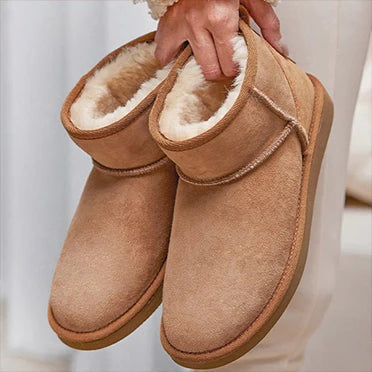


When you shop for warm slippers, winter boots, or a cosy-lined accessory, you often see "sheepskin" and "faux" options side by side. In photos they can look alike. For the first few wears, they might even feel the same. But over time, the differences usually show up — in comfort, breathability, how they cope with British damp, and how they age.
This guide explains what "real" sheepskin is, what most synthetic alternatives are made of, and how each performs in real life. The goal isn't to force a choice — it's to help you spend wisely, avoid common disappointments, and end up with something you genuinely love to wear.
A Quick Summary
- Real sheepskin is a natural hide with the wool still attached — not the same as a "wool lining" glued into a shoe.
- Synthetic "sheepskin" is usually polyester or acrylic faux fur glued to a fabric backing, sometimes paired with PU "vegan leather."
- The wool fibres in sheepskin help manage moisture, so it usually feels warm without making you sweat.
- Faux fur can feel nice at first but doesn't always handle heat and moisture the same way, which affects comfort and odour over time.
- Real sheepskin tends to mould to the foot with wear, while synthetic linings are more likely to flatten or mat.
- The gap often widens with durability: well-made sheepskin usually holds its shape longer, while faux fibres can compress.
- Both need care: sheepskin needs gentle cleaning and careful drying, while synthetics can pill and shed but handle wipes better.
- For long-term value, judge construction, outsole, and lining density rather than marketing claims.
- Labels, backing, fibre behaviour, and how the material responds to brushing are the safest ways to check authenticity (skip risky home tests).
- Pick a build that suits your lifestyle — some are indoor-only, some indoor-outdoor, some better for commuting or rainy errands.
What Is "Real Sheepskin"?
Sheepskin is the skin of a sheep with the wool still on it. It's a single natural material: leather on one side, wool on the other, and a dense fibre structure in between. That structure is one reason sheepskin products are often comfortable across a wide range of indoor temperatures.
What Is Shearling — and Is It Different?
In fashion, you'll see the word "shearling." In everyday terms, shearling usually means sheepskin with the wool trimmed to a more even length. It's still real sheepskin — the main difference is look and feel: shorter, even wool can feel smoother and less fluffy.
What "Real Sheepskin" Isn't
Marketing language gets confusing. These are often mistaken for sheepskin:
- Wool-blend lining: a fabric lining with some wool, but not a hide.
- Faux shearling: man-made fibres made to look like wool.
- "Sheepskin effect" or "teddy" lining: usually polyester.
- Bonded wool: wool fibres pressed into fabric rather than attached to a hide.
If a listing uses these phrases interchangeably, slow down and check the details. Our guide on 5 ways to spot the difference between real and faux sheepskin covers this in detail.
What Are Synthetic Alternatives Made Of?
Synthetic alternatives usually use man-made fibres and coatings to mimic soft wool, at least at first. The most common combinations are:
- Faux fur (pile) with a fabric backing: usually polyester or acrylic fibres tufted into a knit backing.
- PU "vegan leather" outside, faux fur inside: a plastic coating over fabric, with synthetic fleece within.
- Microfibre uppers with a synthetic lining: microfibre is usually polyester, sometimes made to feel like suede.
- Foam "plush" linings: soft to the touch but prone to compressing over time.
None of these are automatically "bad" — they're just different materials with their own strengths. Common pros include lower cost, easy cleaning, and consistent quality. For a broader look at how synthetic "leathers" compare, see our article on vegan leather vs real leather.
Real-World Performance: Warmth, Breathability, and Moisture
The question most people care about is: "Will this keep my feet comfortable?" And warmth isn't the whole story. It's about how heat and moisture move as you potter around the house, cook, do the school run, or work from home in your slippers all day.
Temperature Regulation
- Sheepskin: wool fibres trap air (insulation) while letting moisture vapour pass through. That often means warmth without the "plastic greenhouse" feeling.
- Synthetic faux fur: can trap air too, but the fibre-and-backing construction often handles moisture differently. It can get very warm quickly, then feel damp if you overheat.
If you wear slippers for long stretches, that difference matters more than you'd think in a centrally heated UK home. Our article on the science of sheepskin warmth explains the properties behind it.
Managing Moisture and Odour
Your feet sweat — even in winter. What happens next depends on the lining. Sheepskin can hold some moisture within the fibre while still feeling mostly dry to the touch, which many people find less damp. With synthetics, depending on construction, moisture is more likely to sit on the surface or in foam layers, and odour can build up faster if it can't escape. Neither is guaranteed — fit, socks, and rotation all matter too.
Softness Over Time
It's easy to feel soft at first. The real tests are month three, month six, and beyond. Sheepskin wool can compress a little at pressure points, but brushing and airing usually restore it, and dense, high-quality fleece resists flattening. Synthetic fibres can mat down, especially at the heel and ball of the foot, and once crushed, the pile is harder to revive. If you've ever owned a "teddy" fleece robe, you've seen this effect.
Durability and Ageing: What Happens After the First Season?
This is where many buyers notice the biggest difference — and it's not just about tears. It's how the material looks and feels as it collects real life.
How Sheepskin Usually Ages
With good care, the wool may tighten under pressure but can usually be refreshed; the leather side can soften and shape itself for a better fit and feel; and scuffs appear (especially on lighter colours) but are usually manageable. Sheepskin's life is usually cut short by poor care — over-wetting, radiator heat, or harsh detergents. Our guide on caring for sheepskin slippers covers the routine.
How Synthetics Usually Age
Common changes include pilling or bobbling fibres, matting where things rub, cracking or peeling if the outer PU coating is lower quality, and foam losing its "plush" feel as it compresses. Again, quality matters — some synthetics are well made, but many entry-level options aren't built for years of daily use.
A Quick Comparison You Can Screenshot
- Warmth: Sheepskin — warm without overheating. Synthetic — warm quickly, but can feel stuffy.
- Breathability: Sheepskin — usually better. Synthetic — sometimes lower.
- Feel over time: Sheepskin — can mould and stay comfortable. Synthetic — can flatten or mat.
- Care: Sheepskin — gentle cleaning and drying. Synthetic — easier to wipe, but can pill.
- Longevity: Sheepskin — usually better cost-per-wear. Synthetic — sometimes lower, depends on build.
Comfort and Fit: Why Lining Density Beats Fluff
Two things can both be "real sheepskin" yet feel very different — and the same goes for synthetics. What to look for:
- Density over height: dense fibres usually support the foot better than long, thin fluff.
- Heel construction: a firm heel counter and stable footbed matter for indoor-outdoor shoes.
- Seams and binding: rough seam edges can irritate skin, especially in backless styles.
- Sizing behaviour: sheepskin-lined products may feel snug at first but ease slightly as the wool compresses; synthetics may change less.
A Fair Look at Ethics and Sustainability
This topic needs nuance. "Natural" doesn't always mean "perfect," and "synthetic" doesn't always mean "bad." The real question is: what trade-offs am I willing to make, and what will I actually wear long enough to justify the purchase?
Considerations for Real Sheepskin
- Sheepskin is often a by-product of food production — in many supply chains, hides would exist even without footwear demand.
- Processing matters: tanning and finishing vary widely in chemicals and waste management.
- Longevity can be a sustainability benefit: using something longer usually lowers overall impact per wear.
Considerations for Synthetics
- Many faux furs and PU coatings come from petrochemicals.
- Some synthetics shed tiny fibres during wear or washing, especially blanket-style faux fleece.
- On the plus side, they're consistent and sometimes easier to clean, which can help them last in messy households.
A useful mindset: pick a material you'll wear often, care for, and keep beyond one winter. That usually beats buying two or three "quick-fix" pairs that break. For more on this, see our article on why sheepskin boots are worth the investment.
How to Tell Real from Faux Sheepskin (Without Gimmicks)
This is the most important part. Online listings can be vague, and store displays can be confusing. Instead of relying on one "test," use a mix of checks.
Start with Labels and Material Wording
Look for specific terms like "sheepskin," "shearling," "wool and leather," or "real sheepskin." Be cautious of "sheepskin look," "sheepskin style," "faux shearling," and "teddy," "borg," or "plush." If the outside says "PU" or "synthetic" and the lining says "sheepskin feel," it's very likely not real sheepskin.
Look at the Fibre Base and Backing
Real sheepskin is wool attached to hide. Synthetic pile is stitched or glued into fabric. In person, check the base near a seam: real usually shows a natural hide backing, while synthetic usually shows a woven or knit backing.
Check How the Fibres Behave
Real wool has a natural bounce and variation — it often separates and fluffs back up when brushed. Synthetic fibres can look shinier and more uniform, and once matted, usually stay that way.
Skip "Home Burn Tests"
You'll find tips online about burning fibres to "prove" the material. It's dangerous, could damage the product, and isn't worth it. Checking labels, fibre behaviour, and backing is usually enough. For a fuller checklist, our real vs faux sheepskin guide walks through the safe checks.
Which One Suits Your UK Lifestyle?
The right choice depends on where and how you'll wear it.
If Your Home Is Warm (Modern Heating, Insulated Rooms)
You might prefer real sheepskin for warmth without overheating, or a lighter synthetic fleece if you get cold easily and want instant cosiness.
If Your Home Is Cold (Old, Draughty, or Cold Floors)
Consider a thicker sheepskin lining with a supportive sole, and a higher-collar style to keep heat from escaping around the ankle.
If You Go In and Out (Bins, Garden, Quick Errands)
Pay attention to outsole grip and thickness, water-resistance on the outside, and edge protection for the lining (wet grass and doorsteps are hard on soft fibres). For genuinely outdoor-capable options, look at sheepskin boots with a proper outsole.
Care and Cleaning: Keeping Both Materials Comfortable
Many products fail early at the care stage. The good news: small habits make a big difference.
Caring for Real Sheepskin
Daily/weekly: let them breathe between wears, lightly brush to lift the wool and prevent matting, and spot-clean marks promptly.
If they get wet: blot with a clean towel, stuff with paper to hold shape (change it as it dampens), and dry at room temperature away from direct heat. Hair dryers and radiators can stiffen leather and damage fibres.
Odour: airing out usually helps. If using a powder, test a small area and brush it out thoroughly. Avoid strong chemicals.
Caring for Synthetic Alternatives
- Wipe PU or smooth microfibre with a damp cloth.
- Brush faux fur gently to lift flattened areas.
- Avoid high heat, which can melt or harden synthetic fibres.
- If machine washable (check the label), use a gentle cycle and air-dry — many faux linings look worse after tumble drying.
Common Mistakes That Lead to Disappointment
- Buying on fluff alone: long pile may look cosy but can lose shape fast if it's sparse.
- Ignoring the sole: a thin sole makes even a warm lining feel cold on tiled floors.
- Assuming "vegan leather" means breathable: many PU coatings trap moisture.
- Over-cleaning sheepskin: too much water and the wrong products can harm it more than light wear.
- Not rotating pairs: wearing the same pair daily without airing reduces comfort and worsens odour.
If you want something for everyday wear, do a quick gut-check: structure and materials first, "cute and fluffy" second.
So, What's the Real Difference?
In short: real sheepskin is a natural hide-and-wool material that, cared for properly, is often excellent at warmth, breathability, and long-term comfort. Synthetic alternatives are built to mimic that feel at first and are often easier to wipe down, but they tend to lose loft and comfort faster and may feel less breathable depending on construction.
Neither is always the best choice for everyone. But if you're deciding on long-term comfort and cost-per-wear, well-made sheepskin is usually the safer bet. A good-quality synthetic can still be a smart choice if you want something easy to care for, predictable, and lower cost up front.
Frequently Asked Questions (FAQ)
Does real sheepskin always keep you warmer than faux fur?
Not always. Faux fur can feel very warm at first because it holds heat well. Real sheepskin feels warm in a more even, regulated way, especially after extended wear.
Does sheepskin stop feet sweating?
In many cases sheepskin manages moisture better than synthetics and feels more breathable. Socks, fit, and room temperature still matter.
Is shearling the same as sheepskin?
Shearling is usually real sheepskin with the wool trimmed to an even length. It's still a hide with wool attached.
Why does faux fur lose its shape so quickly?
Synthetic fibres compress and mat at pressure points like the heel and ball of the foot. Once the pile breaks down, it's harder to restore than natural wool.
Can I wear sheepskin slippers outside in the UK?
Yes, if the slipper has the right outsole, edge protection, and outer. Wet grass and damp pavements put a lot of stress on an unprotected fluffy lining.
What's the best way to clean sheepskin without damaging it?
Use minimal water and gentle spot cleaning, and air-dry away from heat. Brushing the fibres once dry helps lift them.
Does synthetic "vegan leather" last as long as real leather?
It depends on thickness and quality. Many PU coatings crack or peel with wear, especially where the foot bends. Better synthetics last longer, but construction is key.
Is it ethical to use real sheepskin?
Ethics depend on sourcing and processing. Some sheepskin is a by-product of food production, but tanning and supply-chain standards vary. If you care, look for clear material information and signs of responsible manufacturing.
How can I tell if something is real sheepskin online?
Look for "sheepskin" or "shearling" in the materials list and clear close-up photos of the seams and lining. Vague terms like "sheepskin feel" usually mean synthetic.
Do sheepskin products smell?
New natural materials can have a mild smell that usually fades with airing. A persistent smell is more likely caused by trapped moisture, poor airflow, or improper drying after getting wet.